Repairs to Final Coat
Wood Floor Restoration in London
Board repairs, gap filling, a three-stage sand, colour if you want it, then oil or lacquer. The whole rescue, from the first loose board to the last coat.
★★★★★ 4.9 from 53 Google reviews
Home · Wood Floor Restoration London
More Than a Sand
Sanding Is One Stage. Restoration Is the Whole Rescue.
If your floor is solid underfoot and just looks tired, you don't need this page: a straightforward sand and seal will do it, and our floor sanding page covers that job properly. This page is for the floors with more against them.
The floor hidden under thirty years of carpet. The one the builders treated as a workbench. Split boards, missing boards, gaps that whistle in winter, water marks by the door, a finish worn through to grey timber in the walkways. A floor like that needs carpentry before it needs a machine, and putting the stages in the right order is the difference between a rescue and an expensive polish of the damage.
Some people call it refinishing, some call it wood floor renovation. We call it restoration, and it's the same promise under any name: the floor you've got, brought back properly, rather than ripped out and skipped. And because we price after a free site visit rather than off a photo, the quote covers what your floor actually needs. For a feel of the numbers, our cost guide walks through a worked example.
The Order of a Rescue
What a Full Restoration Includes
Every restoration follows the same shape, because the order is what makes it work. Repairs first, so the floor is sound. Gaps dealt with, so the machines have one continuous surface. Then the three-stage sanding process takes the whole floor, old timber and new repairs together, back to clean bare wood. Our oak sanding guide walks through those stages cut by cut. Colour comes next if you want it, and the finish goes on last.
- Damaged and missing boards repaired or replaced, loose ones fixed down
- Gaps filled to suit the floor: flexible filler on boards, resin on parquet
- The three-stage sanding process across the whole floor, repairs included
- An optional stain while the wood is bare, patch tested on your own floor
- Your choice of finish: three coats of lacquer, or two coats of oil
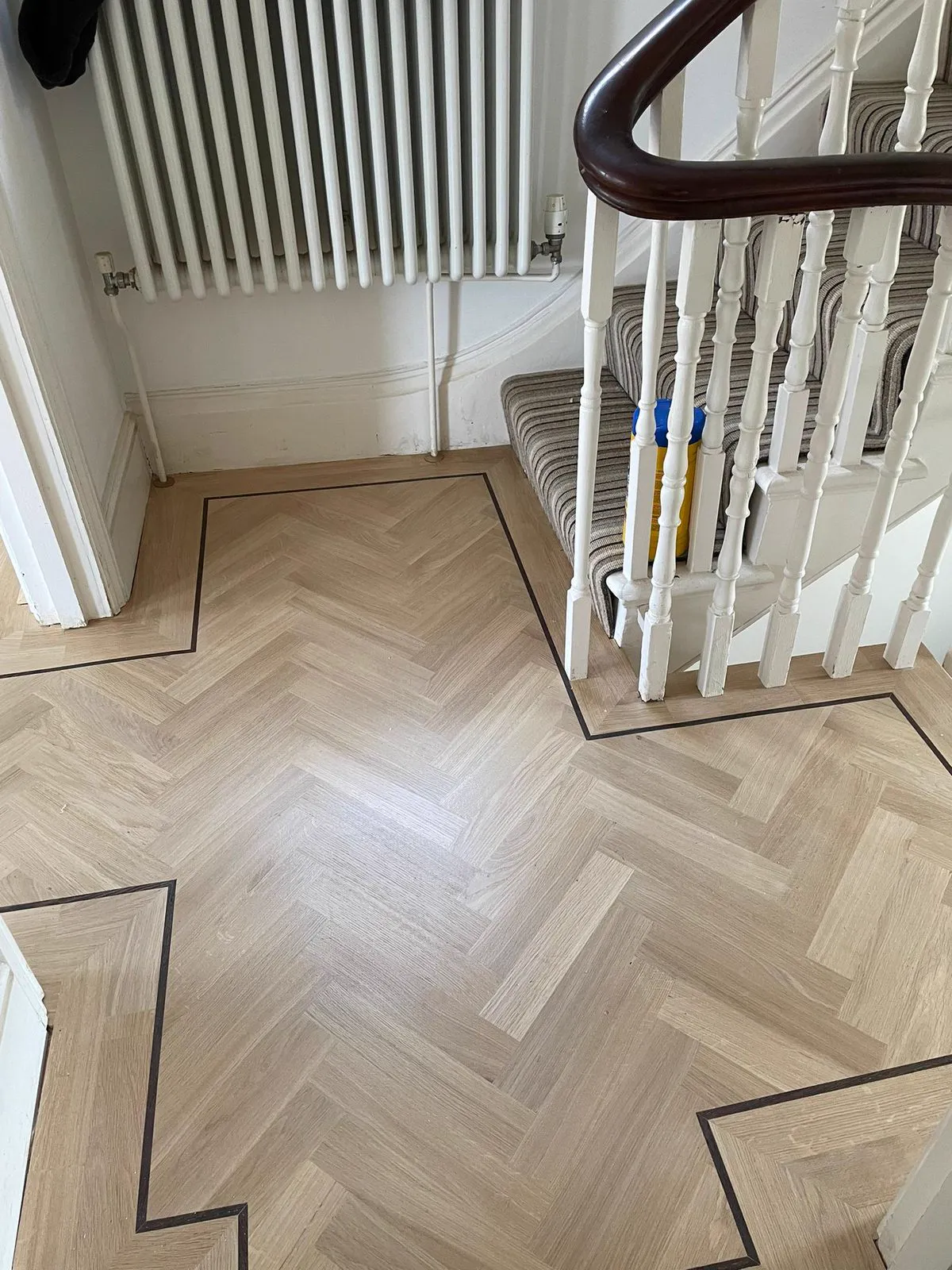
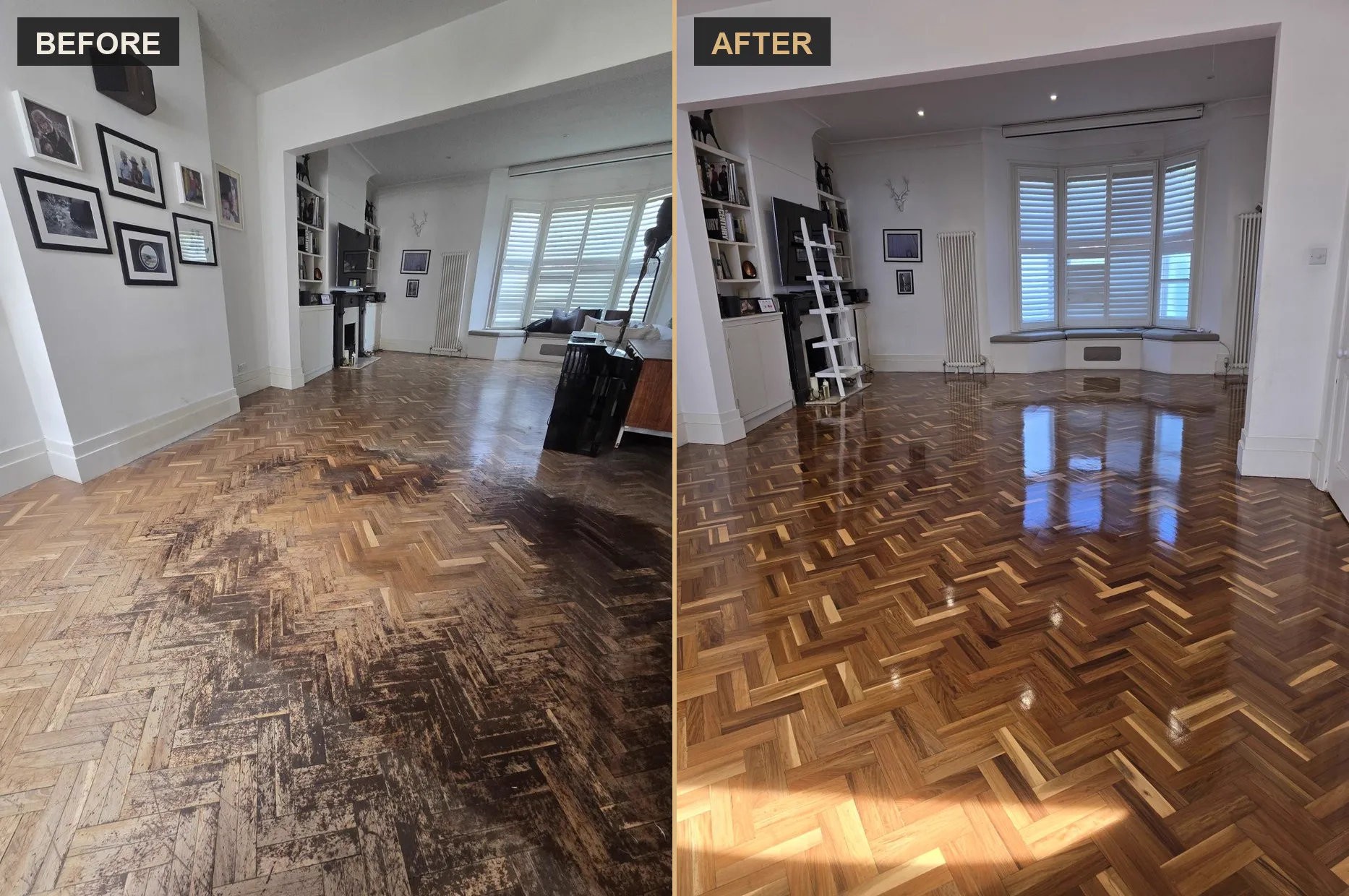
Our floor machines capture around 95% of the dust at source through industrial extraction, so the sanding stages leave the house remarkably clean. The herringbone in this photo is one of ours: a 1930s floor in Purley, re-bonded around the fireplace and brought back in exactly this order.
Carpentry Before Machinery
Repairs and Gap Filling Come First
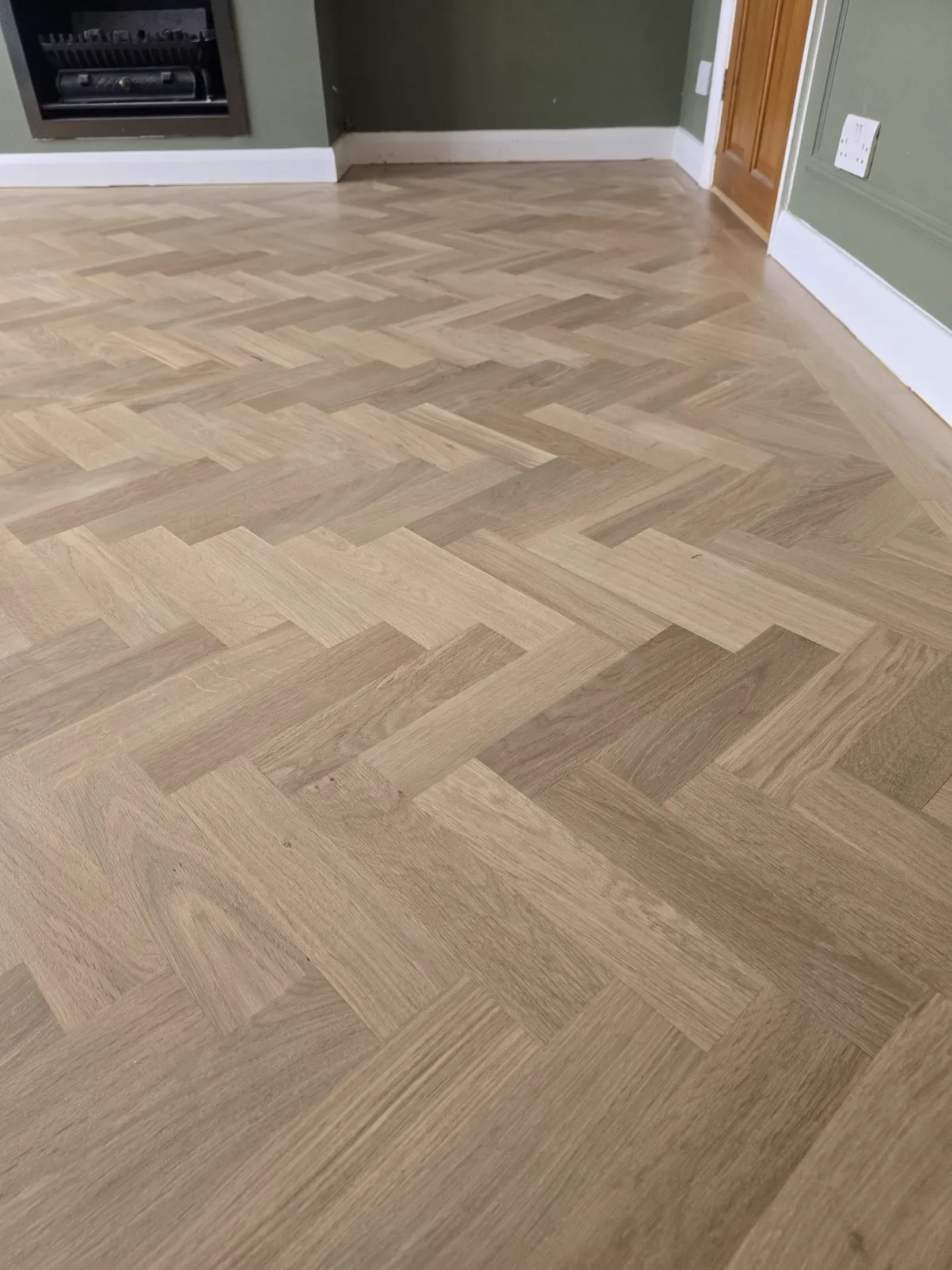
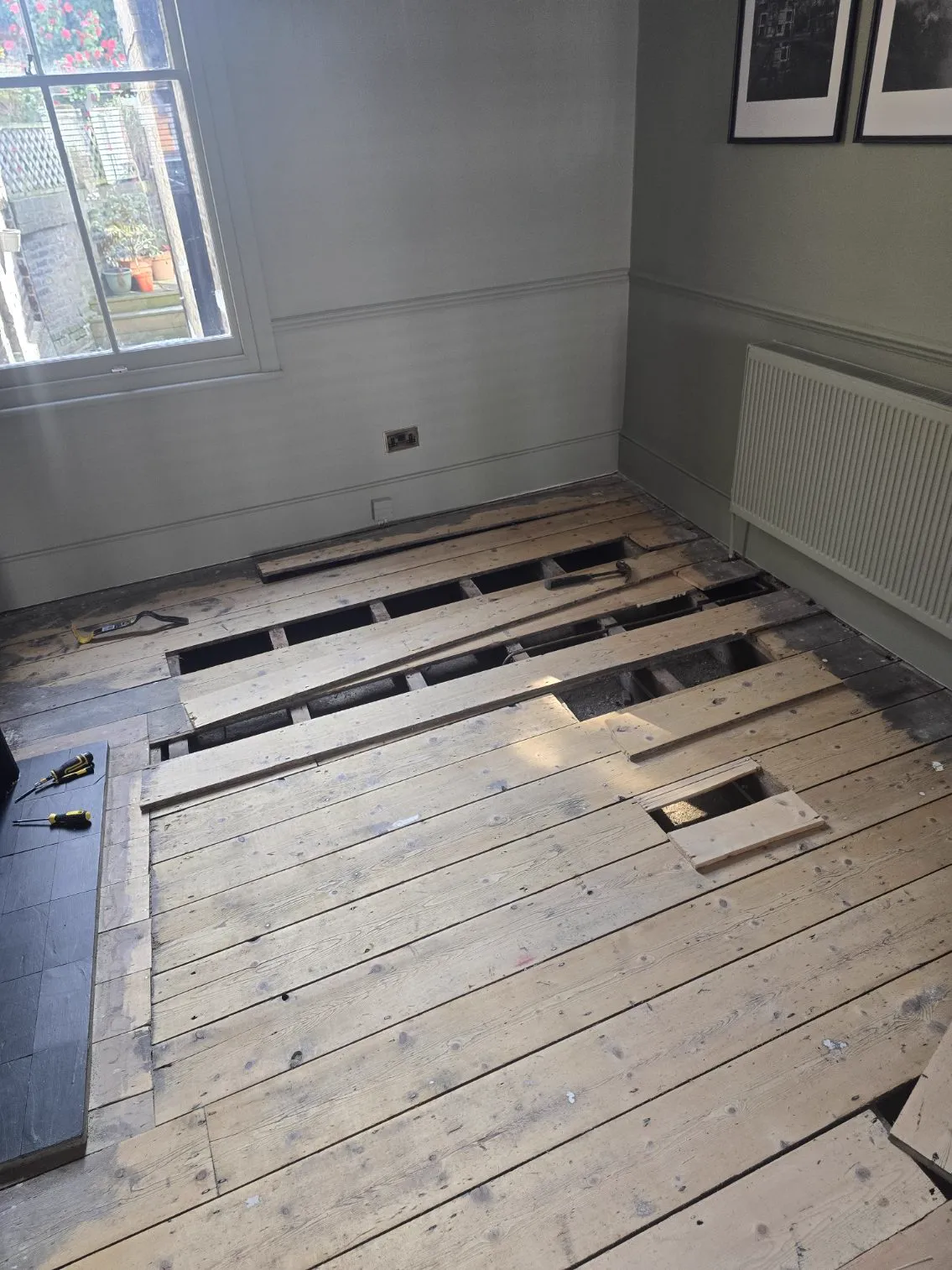
No machine goes near the floor until it's sound. Split and broken boards come up, and on older floors the replacements are reclaimed timber of the same species and age, because a bright new board in a hundred-year-old floor never stops announcing itself. Loose boards are fixed down and old nail heads punched clear. The full detail is on our repairs page.
Then the gaps. On suspended floorboards we use flexible filler that moves with the timber through the seasons, with slivers of matching wood for the widest runs. On glued-down floors, resin mixed with the floor's own sanding dust does the job. We've written up why the two are not interchangeable, because using the wrong one is one of the commonest mistakes we're called in to undo.
Only then does the sanding start, and by that point it's working with a solid, continuous floor instead of fighting a broken one.
Not Just Original Boards
Restoring Engineered Wood Floors
A lot of London homes now have engineered floors, and a lot of owners have been told they can't be sanded. That's mostly wrong. An engineered board is a real wood wear layer bonded to a plywood core, and as long as enough of that wear layer remains, the floor restores like any other.
The wear layer is the whole question, which is why we check it at the free site visit before promising anything. Most engineered floors can be sanded once or twice in their lifetime, depending on how thick the wear layer is and whether anyone has sanded it before. Get that judgement wrong and the machine cuts through to plywood, which is why we measure first and tell you straight, including the rare case where the honest answer is that the floor shouldn't be sanded again.
When it can be, the process is gentler than on solid timber: lighter cuts, finer abrasives, and the same choice of oil or lacquer at the end. Done right, an engineered floor comes back looking like the day it was laid.
Pattern and Colour
Parquet, Herringbone and a New Shade
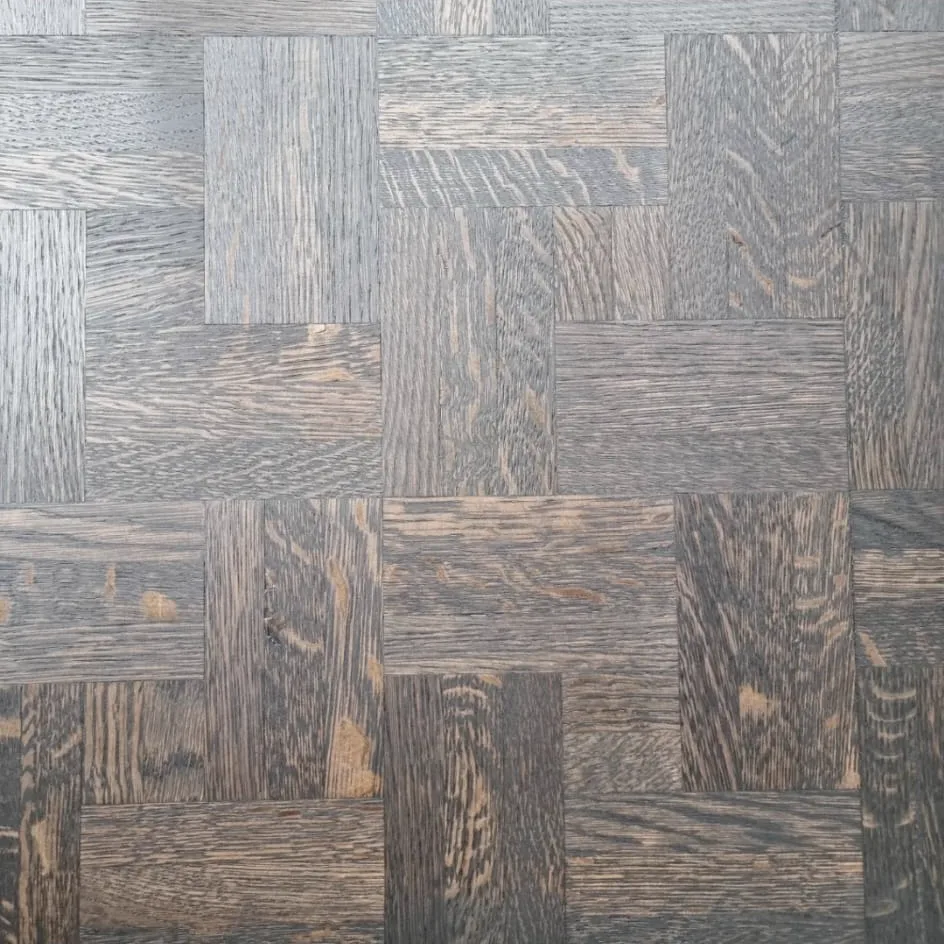
The floor in this photo is a finger mosaic we laid raw and stained black on site, block by block: the full story is on the blog. Pattern floors are their own discipline. Blocks lie in different directions, the old bitumen underneath fails, and a careless sander leaves its mark in every block that lay the wrong way. We restore herringbone, chevron and block floors constantly, and the full story is on our parquet restoration page.
Restoration is also the one moment a colour change costs almost nothing extra, because the floor is going back to bare wood anyway. Our staining page shows the colours we work with and how the free patch test on your own boards takes the guesswork out. If you'd rather see it before we arrive, upload a photo of your room to the visualiser and try the shades on your actual floor.
The Same Hands Throughout
Restored by the People Who Priced It
One of us is on every job. The person who kneels down at the site visit, lifts the corner of the carpet and measures the wear layer is the same person who runs the machines and lays the final coat. Between the two partners there's over 40 years' combined hands-on experience, most of it on exactly this kind of floor: the ones other firms quoted to replace.
And because we install floors as well as restore them, the advice isn't loaded. If your floor is worth saving, we'll save it. If it truly isn't, we'll say so and quote a new one instead. Either way you get a fixed written quote and an honest opinion, not a sales pitch.
We restore floors across South London and central London from our base in Balham. Two recent rescues tell the story: the inherited walnut herringbone in Fulham and the worn herringbone reception in Clapham.
Finished restorations are in the gallery, and what the owners thought afterwards is on the reviews page.

Dean on the way to a job: the same face at the site visit, behind the machines and laying the final coat.
No Obligation
Wondering if your floor is saveable? One free visit settles it, and the answer is usually yes.
Book a Free Site VisitStraight Answers
Restoration Questions, Answered
What counts as restoration rather than just a sand?
Can engineered wood floors be restored?
Some of my boards are split or missing entirely. Is the floor still saveable?
Do gaps between the boards get filled?
Can the floor come out a different colour than it went in?
How long does a full restoration take?
Is it worth restoring, or should I just replace the floor?
Is the restoration work dusty?
From Our Google Reviews
"I bought a house which had not been touched since the 1950s and in the bedroom we pulled up 7 or 8 layers of carpet to find the original floorboards from 1906, they were black in places, some parts painted and lots of gaps and loose floorboards. I went on holiday and Dean and his team came in and fixed the floor, sanded and varnished it in two days... When I came back the floor was unrecognisable, there was no dust anywhere and everything was perfect. Would highly recommend."
Thirty Seconds, Five Boxes
Tell Us About Your Floor
Leave your details and we'll ring you back to arrange your free site visit.
We're booking about three months ahead at the moment, and a deposit holds your place in the queue. Dates tight? Ring us anyway, cancellations happen and smaller jobs can often be slotted in.
Every job is backed by the Howard Naish Workmanship Promise: 2 years on installation, 12 months on sanding and refinishing. If our work fails, we fix it.
The Same Floor, Before and After
Free Quote, No Obligation
Your Floor Is Probably Saveable
One free visit, an honest verdict on what it needs, and a fixed quote in writing.
020 3131 0122