Stair Sanding
Stair Sanding in London
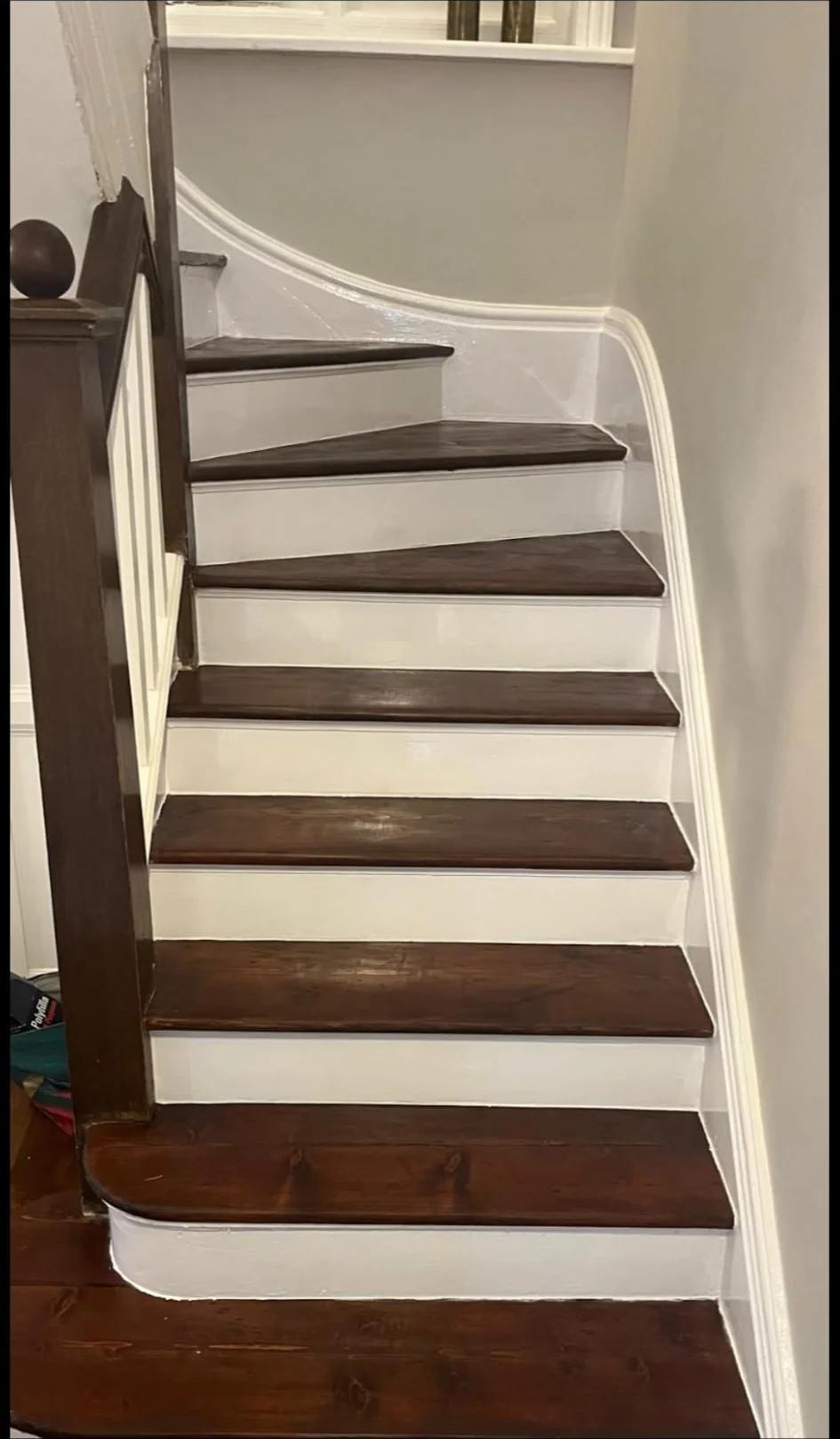
Treads sanded and finished by hand. Risers keyed and ready for paint. The staircase look every design company is asking for, done by the two people whose names are on the van.
Home · Floor Sanding · Stair Sanding
The Look
Sanded Treads, Painted Risers
On pine staircases, this is what we recommend and what the design companies we work with ask for again and again: sand and finish the treads, and paint the risers the same colour as the skirting that runs around the steps. It breaks up the wood, frames every step, and gives the staircase the cleanest, most deliberate finish there is. Very much in fashion right now, and because sanding just the treads is roughly half the work of sanding the whole staircase, it saves you real money too.
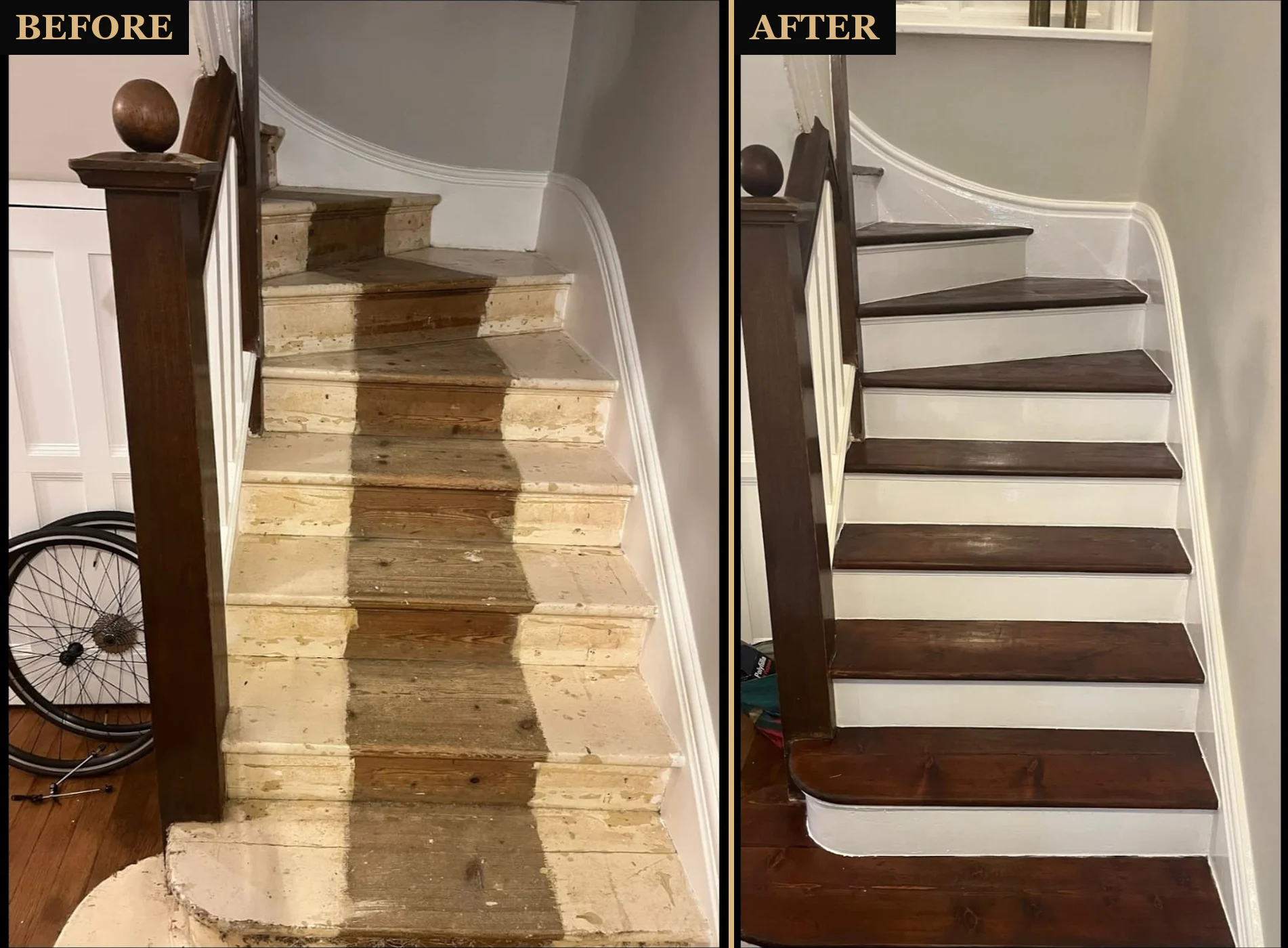
The same staircase: carpet off and years of runner marks on the left, sanded treads and painted risers on the right.
There's history under old stair paint, too. In Victorian homes, stairs were rarely carpeted edge to edge: a narrow runner ran up the middle, held by brass rods, and the exposed borders either side were painted or stained near-black, usually with lead-based paint. Lift an old runner today and you'll often find those dark painted edges still there, with a lighter strip up the centre where the carpet protected the wood, exactly what you can see in the before photo above. That old paint soaks deep into the grain, and because stairs are sanded by hand rather than with big machines, some shadow of it almost always survives even a full sand. We treat old stair paint as lead-based and work to HSE guidance, and it's one more honest reason we recommend sanding the treads and painting the risers: it hides the history cleanly, and it's exactly how these staircases looked when they were new.
Straight Talk
The Honest Bit About Stairs and Dust
First, the good news: when we're sanding treads only, the machines sit flat, the right way round, and the extraction does its job. We can keep the dust down to next to nothing and your house stays pretty much dust-free.
A full staircase is a different story, and here's the honesty nobody else will give you: there is no such thing as dust-free full stair sanding, and anyone who claims it is lying to you. Stripping risers and working the edges means small sanders, scrapers and handheld tools held at angles the extraction was never designed for, and that creates dust. It is very dusty, very hard, very physical work, which is exactly why stairs cost more per square metre than any floor we sand.
What we promise instead of a fantasy: we sheet up properly, we work carefully, and we clean down thoroughly when the graft is done. Honest dust talk, honest results.
Honest Pricing
What Stairs Cost
Here's the truth of it: we could sand a hundred metres of flooring quicker than we could sand one flight of stairs. Every step is hand work, so stairs are priced as the craft job they are. As a guide:
- Pine staircase, treads and risers: around £1,200 plus VAT. The full job: treads and risers both sanded and finished.
- Pine staircase, treads only: around £500 plus VAT. The sanded-treads, painted-risers look: we sand and finish the treads and key up the risers ready for your decorator's paint (the painting itself isn't ours).
- Oak staircase, whole flight: around £750 plus VAT. Oak steps are a little easier on us, there's no old paint to fight.
These are guides, not fixed rates: winders, spindles, balustrades and what's been painted on over the decades all move the price. We look, we quote in writing, and the number doesn't change after that.
And one more thing, because it matters: at Howard Naish we do things properly. A stair sand from us is not a quick skim over the top. If we say we're sanding your stairs, we're sanding your stairs: back to clean timber, every step, ready for a finish that lasts.
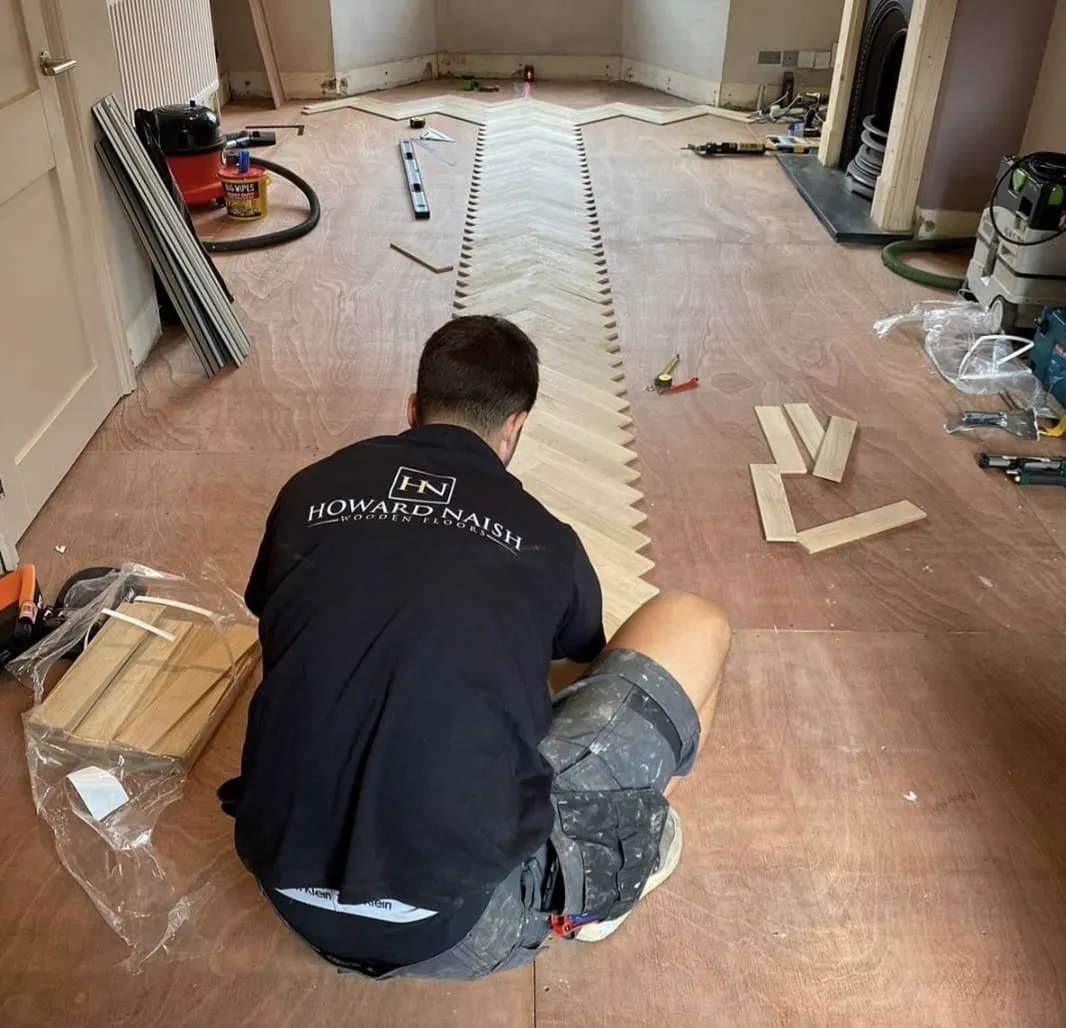
Luke on the tools. Stairs get the same two people as the floors: one of us on every job.
Every job is backed by the Howard Naish Workmanship Promise: 2 years on installation, 12 months on sanding and refinishing. If our work fails, we fix it.
Questions
Stair Sanding FAQs
Why paint the risers instead of sanding them?
It's the look design companies are asking us for on almost every staircase right now: sanded treads with the risers painted to match the skirting. It breaks up the wood, frames every step, and because sanding just the treads is roughly half the work of sanding the whole staircase, it saves you money too.
Is stair sanding dust-free?
Treads only: pretty much, yes. The machines sit flat and the right way round, so the extraction works and we keep the dust down to next to nothing. A full staircase with the risers stripped is a different story: small sanders, scrapers and handheld tools held at angles, and anyone who tells you that's dust-free is lying. We sheet up and clean down properly, but a full stair strip is dusty, hard, hand-finished work. What the extraction machines achieve on the open floor is on our dust-free floor sanding page.
Do you paint the risers?
No, we're the wood side of the job. We sand the treads and key up the risers so they're perfectly ready for your decorator's paint, but the painting itself isn't ours.
How much does stair sanding cost?
As a guide: a full pine staircase, treads and risers both sanded and finished, comes in around £1,200 plus VAT. Treads only, with the risers keyed up ready for your decorator's paint, is around £500 plus VAT. An oak flight is around £750 plus VAT because there's no old paint to fight. Every staircase is different, winders, spindles and paint history all move the price, so we confirm it in writing after a look.
Staircases sanded across South London and beyond, including: Balham, Clapham, Dulwich, Wimbledon, Southfields, Tooting, Brixton, Streatham Hill, Crystal Palace, Gipsy Hill, Kensington, Purley, Sutton and Camberwell.
From Our Google Reviews
"I’m really pleased with the work Howard Naish Wooden Floors did for me. They spent a full 7 days sanding and finishing my original pine floorboards (two large rooms, hall and landing) and the result is excellent - the finish is beautiful and feels very high quality. They also gave really helpful advice on the best finish and gap filler to use, which I’m glad I followed. The work was good value for the standard achieved. They also sanded and re-oiled my kitchen worktops, which now look like new. Professional, tidy and clearly very skilled - highly recommended."
Thirty Seconds, Five Boxes
Ready to Lose the Carpet?
One look at your staircase and you'll have an honest written price, the finish options, and a straight answer on the dust. Same two people, every step.
We're booking about three months ahead at the moment, and a deposit holds your place in the queue. Dates tight? Ring us anyway, cancellations happen and smaller jobs can often be slotted in.