Herringbone, Chevron & Block
Parquet Restoration in London
Loose blocks re-fixed, missing blocks matched from reclaimed timber, and the whole pattern sanded flat and finished properly.
★★★★★ 4.9 from 53 Google reviews
Home · Parquet Restoration
Why Parquet Is Different
A Pattern Floor Punishes Shortcuts
On straight boards, the sanding machine runs with the grain. On parquet it can't: whichever way you push, half the blocks lie against you. So the sanding has to be planned. The levelling passes run diagonally across the pattern to flatten it without tearing the cross-grain blocks, and then the sequence steps finer and finer until the whole floor reads as one surface, not hundreds of little ones.
It's slower than sanding boards, and it should be. Rush a herringbone floor with a coarse belt and the machine writes its signature into every block that lay the wrong way.
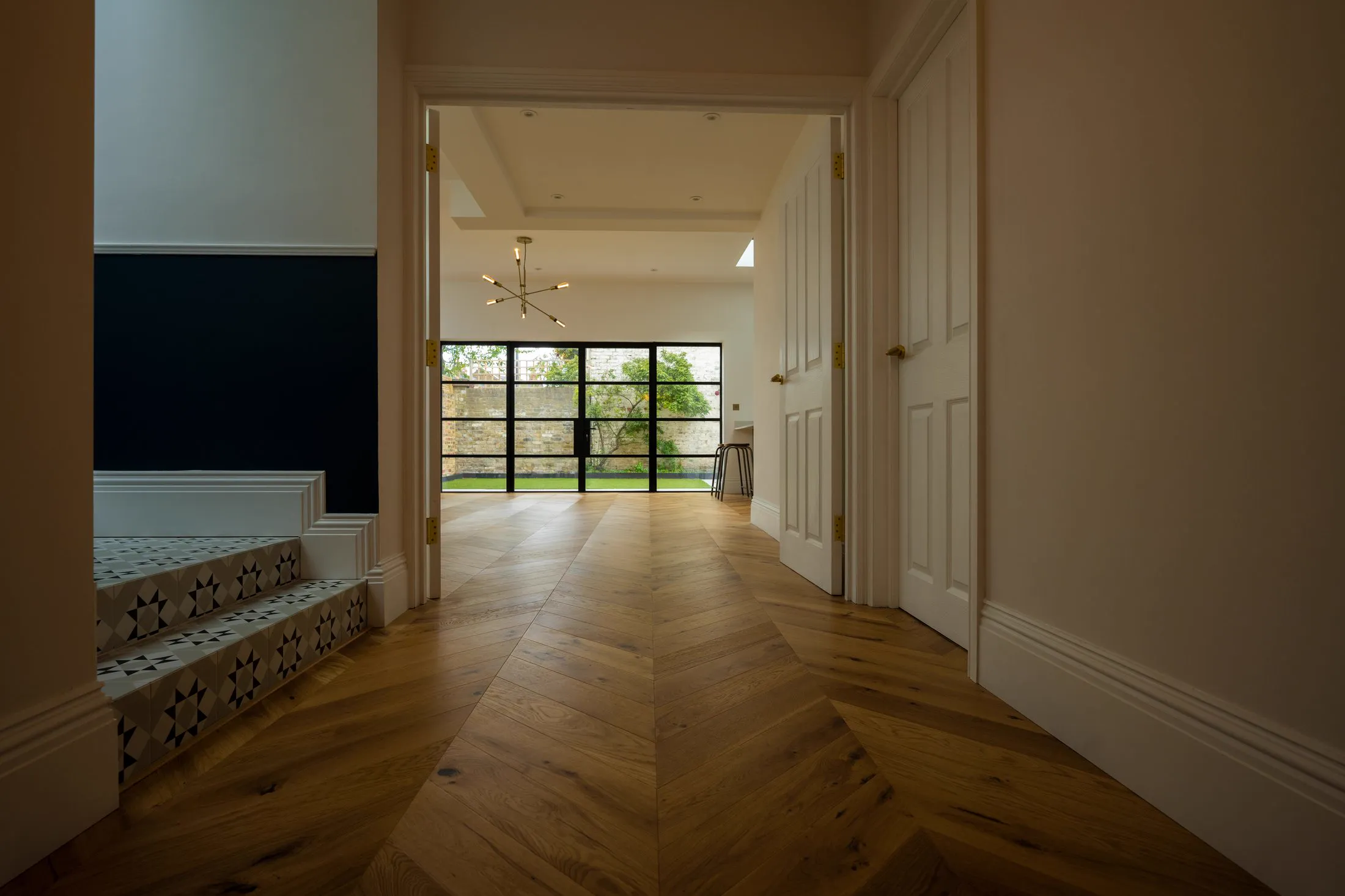
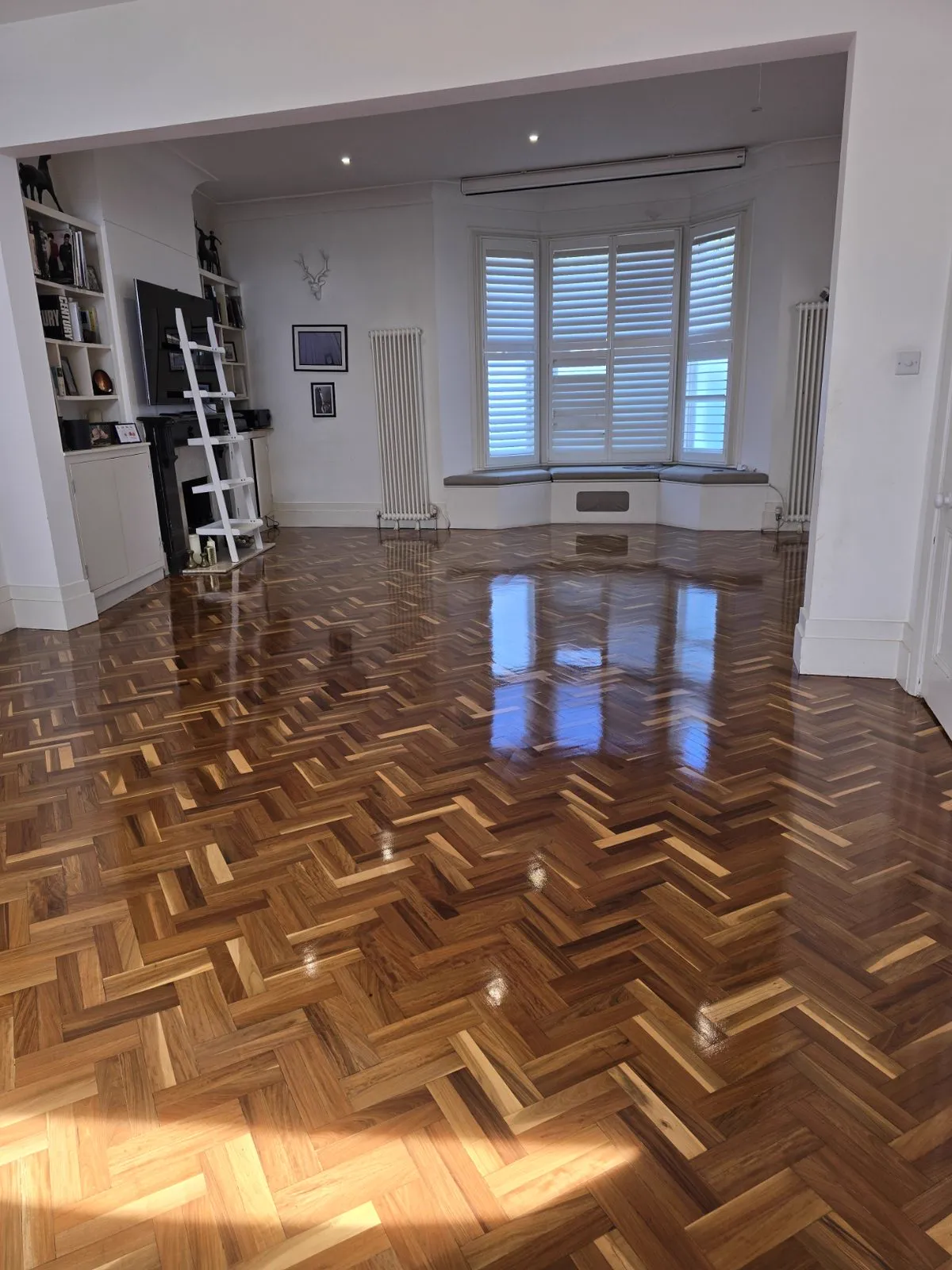
The floor in this photo is original parquet we restored in Clapham; there's more of it on our Clapham page. Another SW4 herringbone came to us after a builder had already gone at it with a belt sander, and we tell that one in full in our Clapham project.
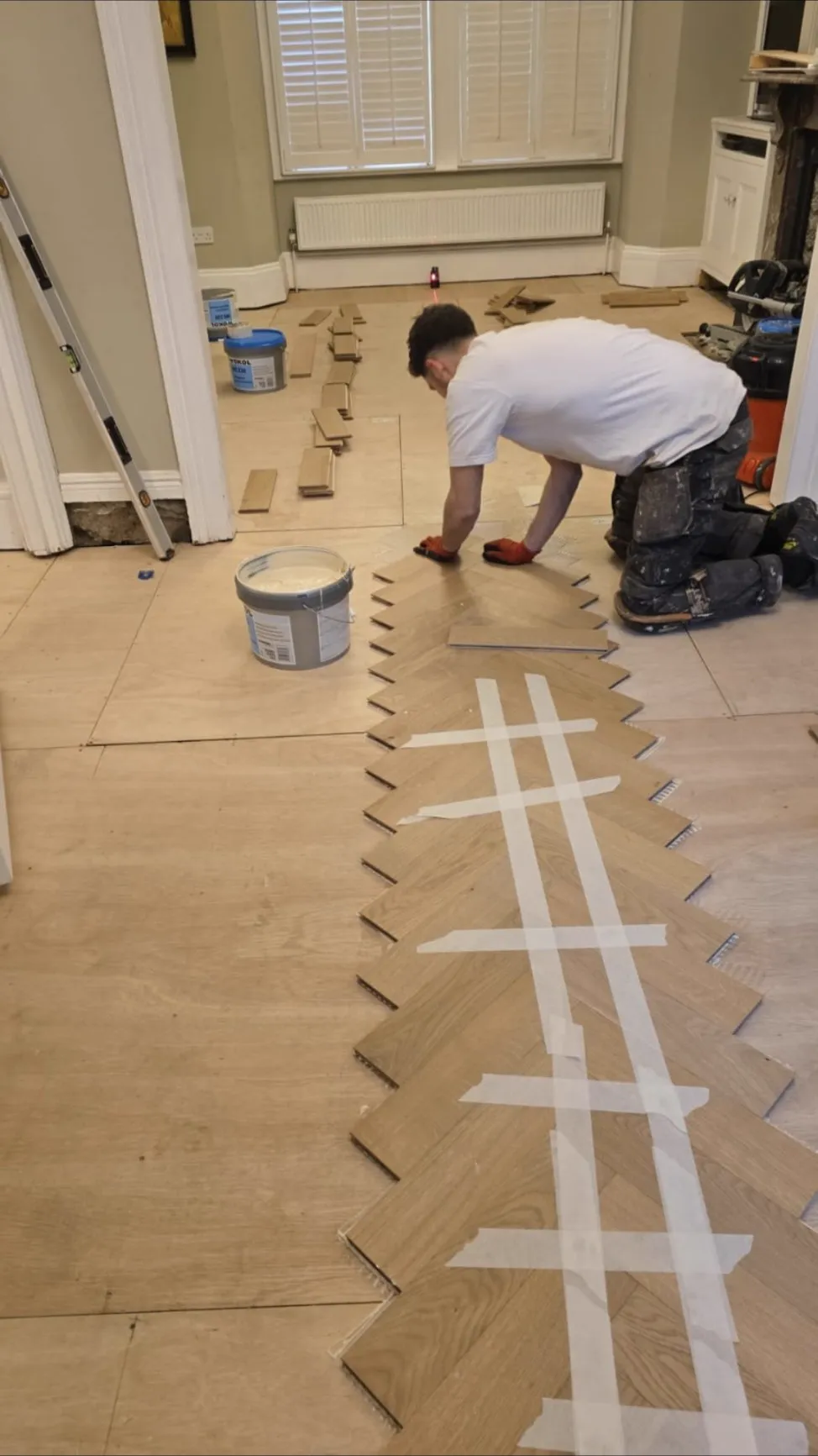
Luke setting a herringbone spine to a laser line. We lay pattern floors as well as restore them, and it is the same discipline both ways.
Right Tool, Right Floor
The Resin Fill Between the Passes
Part-way through the sand, the whole pattern gets a resin fill: filler mixed on the job with the floor's own sanding dust, trowelled across every joint, then sanded off flush. That's Dean in the clip, working it across a finger mosaic. On glued-down parquet, resin is exactly the right tool, because the blocks can't move the way suspended floorboards do. On pine boards we reach for a flexible filler instead, and we've written up why the difference matters.
Dean filling a finger mosaic with resin, mixed with the floor's own dust so it sands back the same colour.
Then it comes back off: the resin sanded flush on a herringbone, staying only where it belongs, down in the joints.
The Fiddly Bits
Borders, Hearths and Thresholds
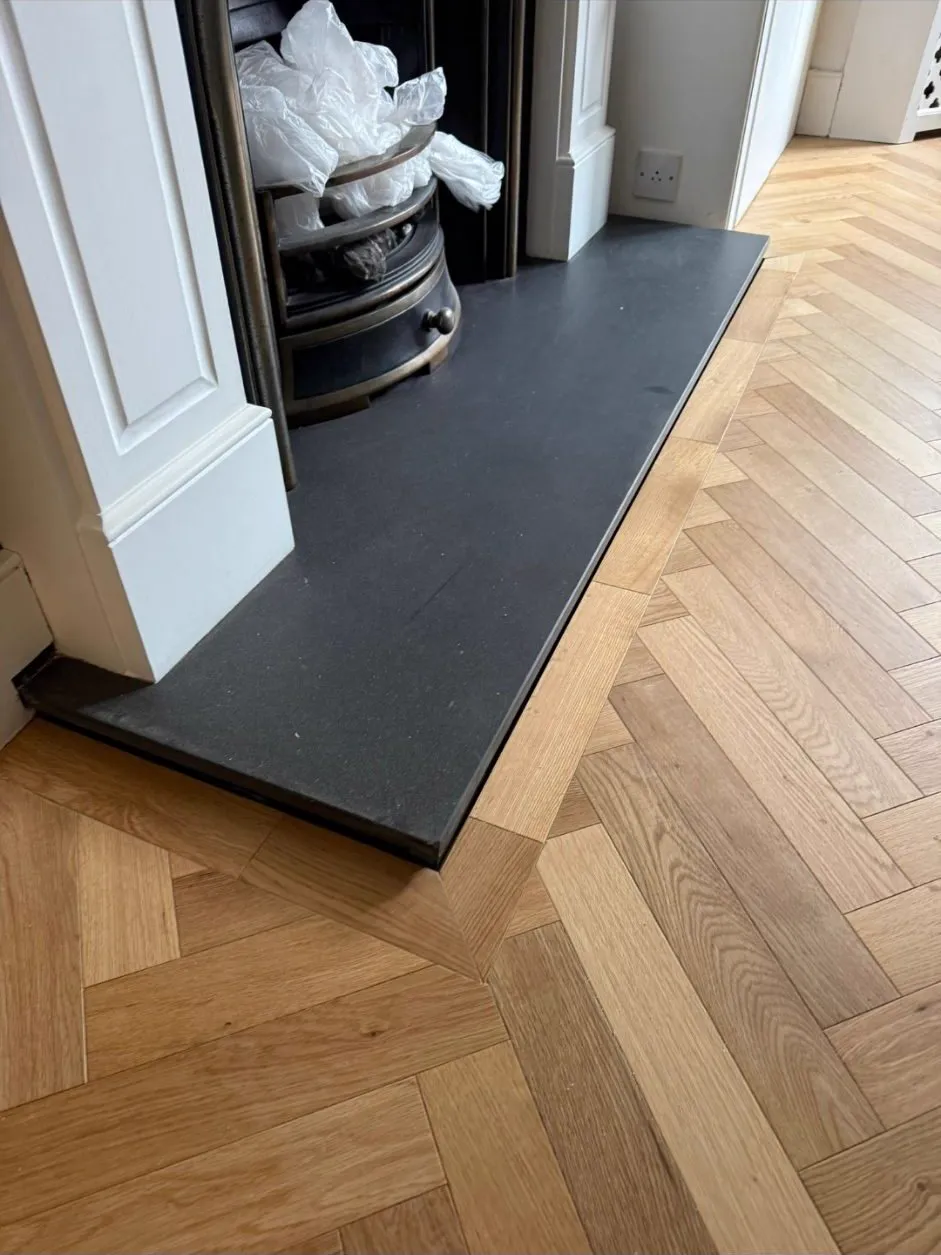
The edges of a pattern floor are where you can tell who did the work. Scribing herringbone cleanly around a hearth, holding a border dead straight down a long hallway, making a threshold meet tile or carpet without a clumsy cover strip: that's hand work, block by block, and it's the part we enjoy most.
The hearth in this photo is ours, from a herringbone job in Wimbledon. There's more pattern work on the Wimbledon and Dulwich pages, and a commercial-scale example on the Kensington page.
Fancy the pattern in a different shade while it's being restored? The staining page shows the twelve LOBA colours and the free patch test, and the floor visualiser will preview any of them on a photo of your own room.
No Obligation
Send a few details and we'll ring you back to arrange a look at the parquet. No charge, no pressure.
Book a Free Site Visit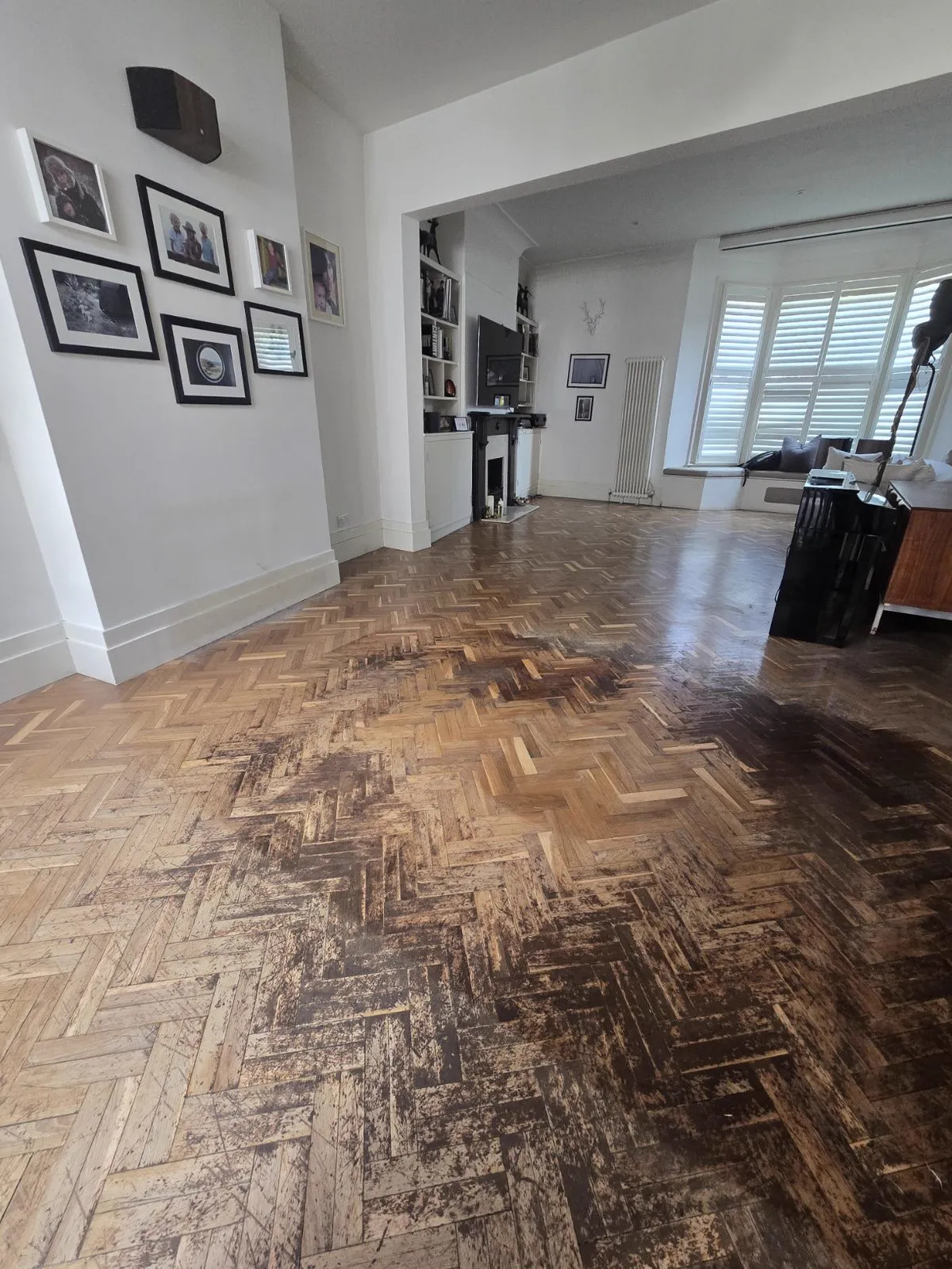
Repairs Come First
Loose, Hollow or Missing Blocks
Original parquet was usually stuck down with bitumen, and after seventy-odd years bitumen dries out and lets go. Blocks lift, rock underfoot, or vanish entirely under decades of carpet. None of that is a reason to give up on the floor.
Before any sanding we lift the failed blocks, clean the old bitumen off the timber and the subfloor, and re-fix everything with modern parquet adhesive. Missing blocks are matched from reclaimed stock, species and size, so once the whole floor is sanded and finished together the repairs disappear into the pattern.
- Loose and rocking blocks re-fixed before the machines run
- Missing blocks matched from reclaimed timber, not new wood that never blends
- Old bitumen dealt with properly, not glued over
- One finish across old and new, so the floor reads as one
Straight Answers
Parquet Questions, Answered
Some of my blocks are loose or missing. Is that a problem?
There's black tar-like glue under my parquet. What is it?
Can you match replacement blocks to my old floor?
Which patterns do you restore?
Can parquet be stained a different colour?
My parquet is hidden under carpet. Is it worth uncovering?
From Our Google Reviews
"Howard Naish did an amazing job at bringing to life our wooden floor which had been down for 20 years. The finish was excellent and it looks brand new. Am really pleased and Dean and his colleague were really professional and helpful."
Thirty Seconds, Five Boxes
Tell Us About Your Parquet
Leave your details and we'll ring you back to arrange your free site visit.
We're booking about three months ahead at the moment, and a deposit holds your place in the queue. Dates tight? Ring us anyway, cancellations happen and smaller jobs can often be slotted in.
Every job is backed by the Howard Naish Workmanship Promise: 2 years on installation, 12 months on sanding and refinishing. If our work fails, we fix it.
Parquet work takes us all over South London. Your local patch: Balham, Clapham, Dulwich, Wimbledon, Southfields, Tooting, Brixton, Streatham Hill, Crystal Palace, Gipsy Hill, Kensington, Purley, Sutton and Camberwell.
Free Quote, No Obligation
Bring the Pattern Back
A free site visit, an honest verdict on what your parquet needs, and a fixed quote.
020 3131 0122