Colour, Proven On Your Floor
Wood Floor Staining in London
Twelve LOBA colours, applied properly after a full sand, and a free patch test on your own boards so you choose from the real thing, never a chart.
★★★★★ 4.9 from 53 Google reviews
Home · Wood Floor Staining
How We Choose Colour
The Patch Test: See It Before You Commit
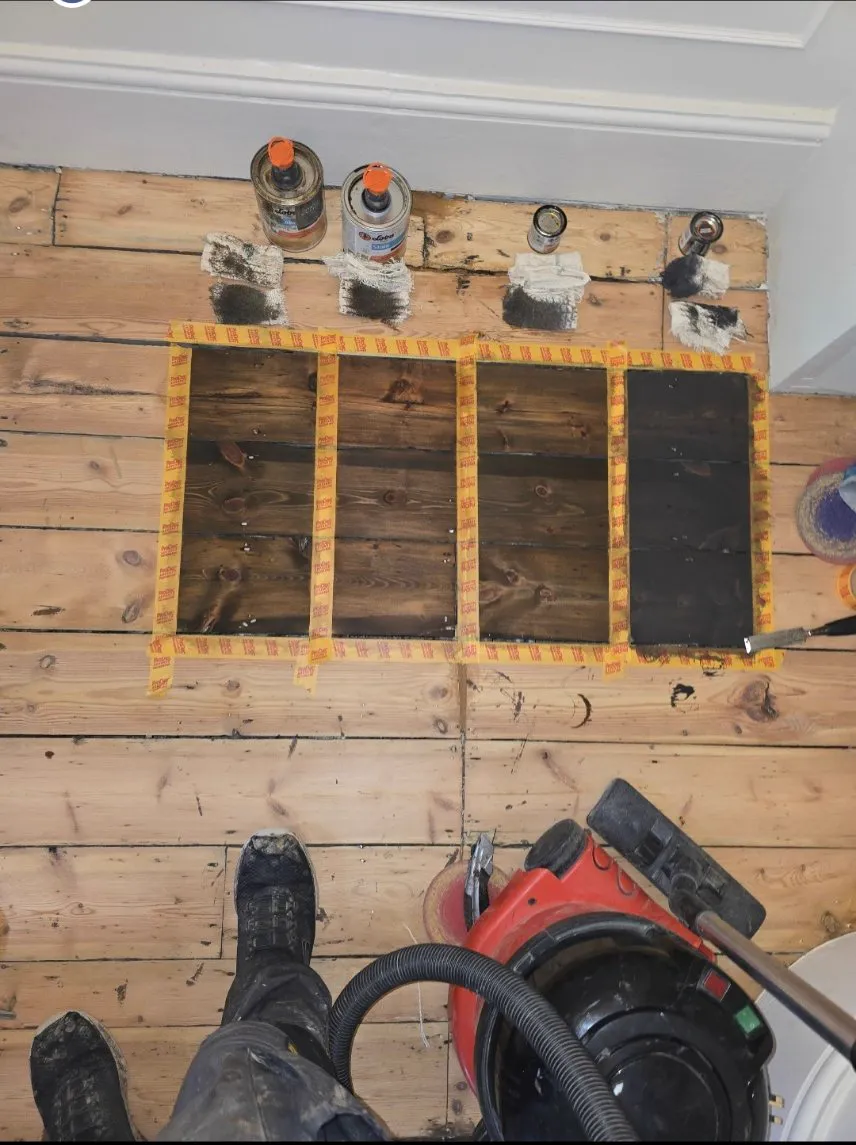
The photograph above is a real one, taken mid-job. Four shades of brown, taped off side by side on the client's own freshly sanded boards, so they could stand in their own room, in their own light, and point at the winner.
That's how every stained floor of ours gets its colour. Not from a printed chart, not from a photo on a website, and not from how the stain looked on a different species of wood in a showroom. The same tin of stain can come out lighter, darker, warmer or cooler depending on the timber, its age and how finely it was sanded. The only honest answer is to put the real options on your real floor.
- Free of charge on every sand and refinish job
- As many shades side by side as you need to decide
- Done after sanding, so the colour behaves exactly as it will on the finished floor
- Nothing is committed until you've picked
The Hard Stuff
If We Can Stain Beech, We Can Stain Yours
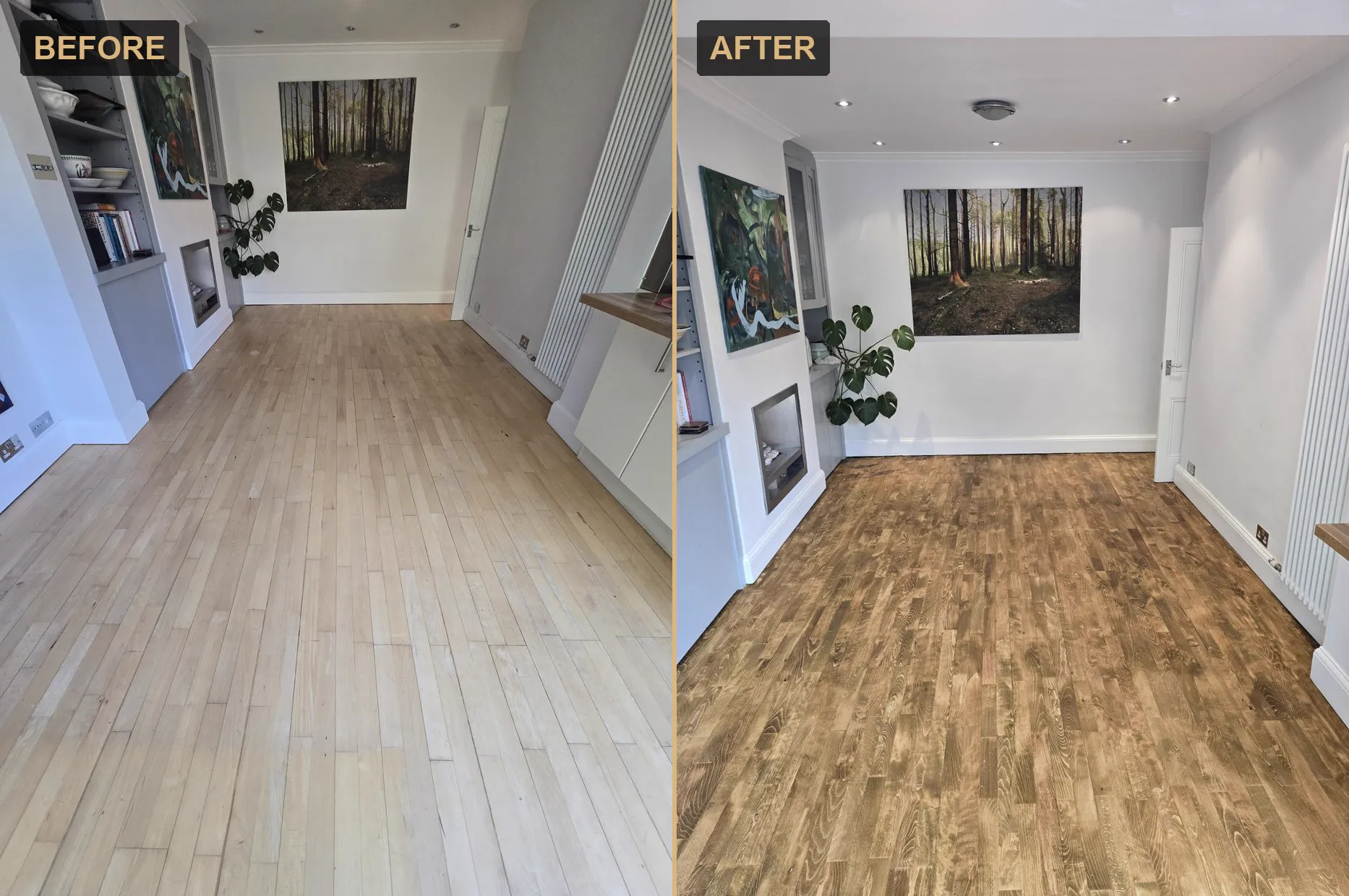
The before and after above is a beech floor we stained in Gipsy Hill, near Tulse Hill. Ask anyone in the trade: beech is the hardest common floor timber to stain. It's so dense and tight-grained that stain tends to sit unevenly and blotch, which is why most firms will simply refuse to stain it. We took that floor from washed-out pale to a rich, even brown, edge to edge. If your floor is oak or pine, the same care gets you an even easier, deeper result.
The LOBA Range
Twelve Colours, From Bleached White to Near-Black
We stain with LOBA, the German finish system we're trained on. The swatches below are a guide to the range; the patch test on your own boards is where the real decision gets made.

Strong White
Chalky, bleached Scandinavian look

Golden Oak
Warm honey amber

Nutmeg
Warm spice brown, a hint of cinnamon

Classic Grey
Cool grey-brown, weathered timber

Dark Grey
Dark slate, cool undertone

Medium Brown
Balanced mid-brown, the safe bet

Provincial
Dark warm brown, red-mahogany lean

Walnut
Dark chocolate, like black walnut

Heritage Brown
Very dark warm brown, nearly espresso

Jacobean
Deep espresso black-brown

Mahogany
Warm red-brown with a plum undertone

Ebony
Intense near-black, the darkest we do
Real stain on real oak, not digital colour chips. And before anything touches your floor, your shortlist gets patch-tested on your own boards.
How It Works
Stain Is a Job Done In the Right Order
Colour changes always start with a full sand back to bare wood: stain needs fresh, open timber to absorb evenly. Before staining we take the sanding a stage finer than we would for a clear finish, because finer sanding means more even colour. Then the patch test, then the chosen stain across the floor, and finally the protection over the top: three coats for lacquer finishes, two coats for oil. If you are torn between the two, our finishes page settles it honestly. And if you want the craft behind all this, grits, water popping, why stain goes blotchy, we've written the whole method up.
That's the stain going on: Dean working it into a parquet floor with the buffer, machine-driven for an even colour edge to edge.
If your floor doesn't actually need a colour change, we'll say so. Some tired floors just need feeding, not staining: read why not every floor needs a full sand.
No Obligation
Torn between two colours? The patch test on your own boards settles it, and the site visit is free.
Book a Free Site VisitStraight Answers
Staining Questions, Answered
Do you charge for the patch test?
Why do a patch test instead of choosing from a colour chart?
Can you stain any wood floor?
Does staining mean I need a full sand first?
How is the stained floor protected afterwards?
Are you on Checkatrade?
From Our Google Reviews
"The team from Howard Naish were incredibly professional and friendly to deal with. The installation and colouring/staining of the floors were also done to the highest quality and workmanship. Would definitely recommend to friends and..."

Dean between jobs. One of us, Dean or Luke, is on every floor we stain.
Thirty Seconds, Five Boxes
Tell Us About Your Floor
Leave your details and we'll ring you back to arrange your free site visit.
We're booking about three months ahead at the moment, and a deposit holds your place in the queue. Dates tight? Ring us anyway, cancellations happen and smaller jobs can often be slotted in.
Every job is backed by the Howard Naish Workmanship Promise: 2 years on installation, 12 months on sanding and refinishing. If our work fails, we fix it.
We stain and finish floors across South London. See your area: Balham, Clapham, Dulwich, Wimbledon, Southfields, Tooting, Brixton, Streatham Hill, Crystal Palace, Gipsy Hill, Kensington, Purley, Sutton and Camberwell.
Free Quote, No Obligation
Fancy a Change of Colour?
A free site visit, honest advice on what your timber will take, and a patch test before anything is committed.
020 3131 0122