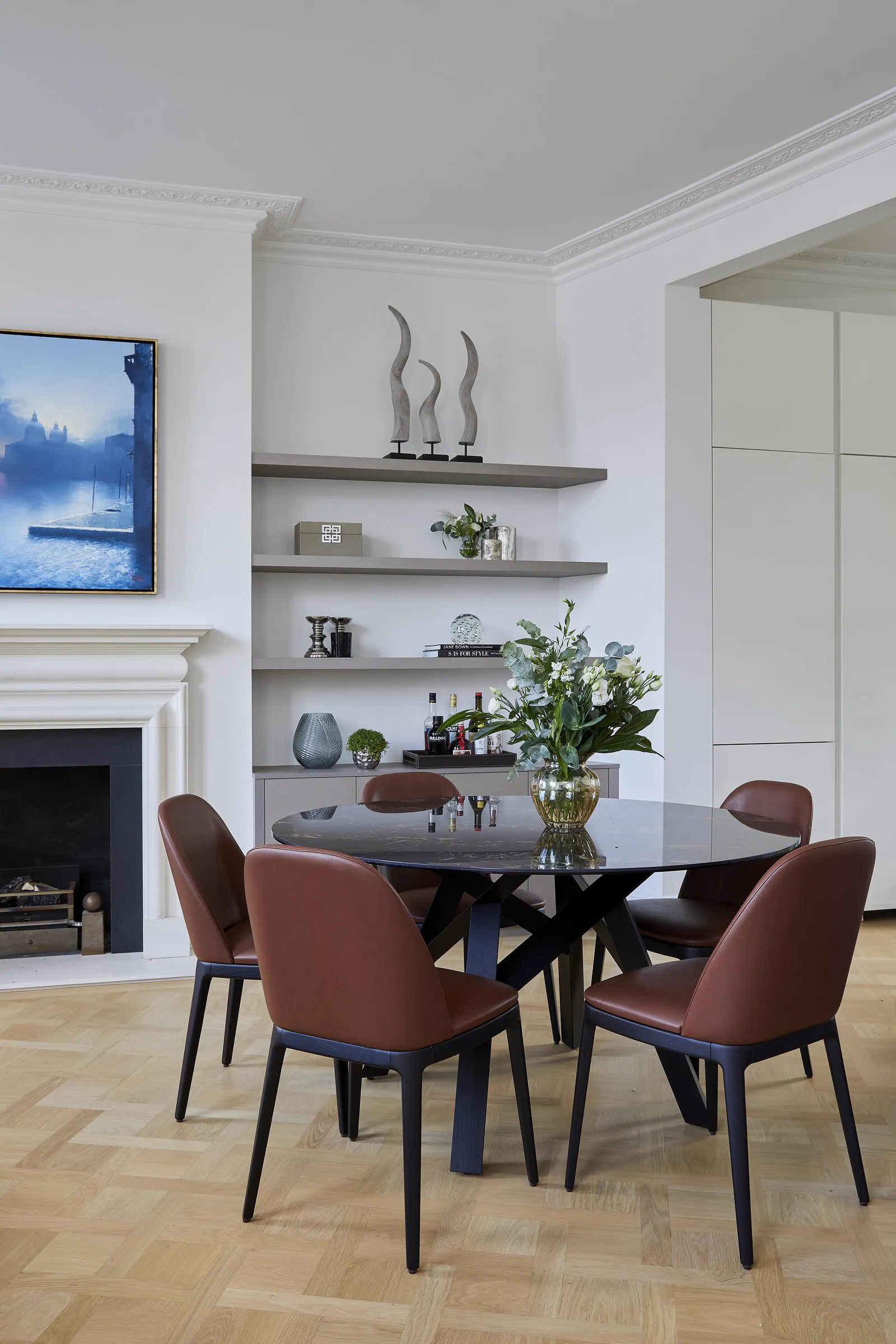
From Our Shop to Your Floor
Engineered Wood Flooring in London
The boards from our own shop, fitted by the two names on the van. Real oak on top, a stable base underneath, and straight advice on which board your room actually needs.
★★★★★ 4.9 from 53 Google reviews
Home · Engineered Wood Flooring London
Supply & Fit, One Firm
The Boards We'd Put in Our Own Homes
We're fitters first. Every engineered range in our shop is there because we've laid it, sanded it and stood on it in other people's homes: the brands we trust and fit ourselves, nothing we wouldn't want our name next to. Wood in the shop is enquire-to-order, so instead of a buy button you get a conversation, real samples in your hands and a written price for the exact boards your room needs.
Want to see a floor before you commit to it? Upload a photo to the visualiser and see any board laid in your own room, planks or herringbone, before a single pack is ordered.
- Real samples in your room, in your light, before any decision
- Straight advice on wear layer, width and finish for your actual room
- One firm responsible for supply, fitting and finish
- Already bought boards elsewhere? We'll fit those too
The First Decision
Engineered or Solid? An Honest Answer
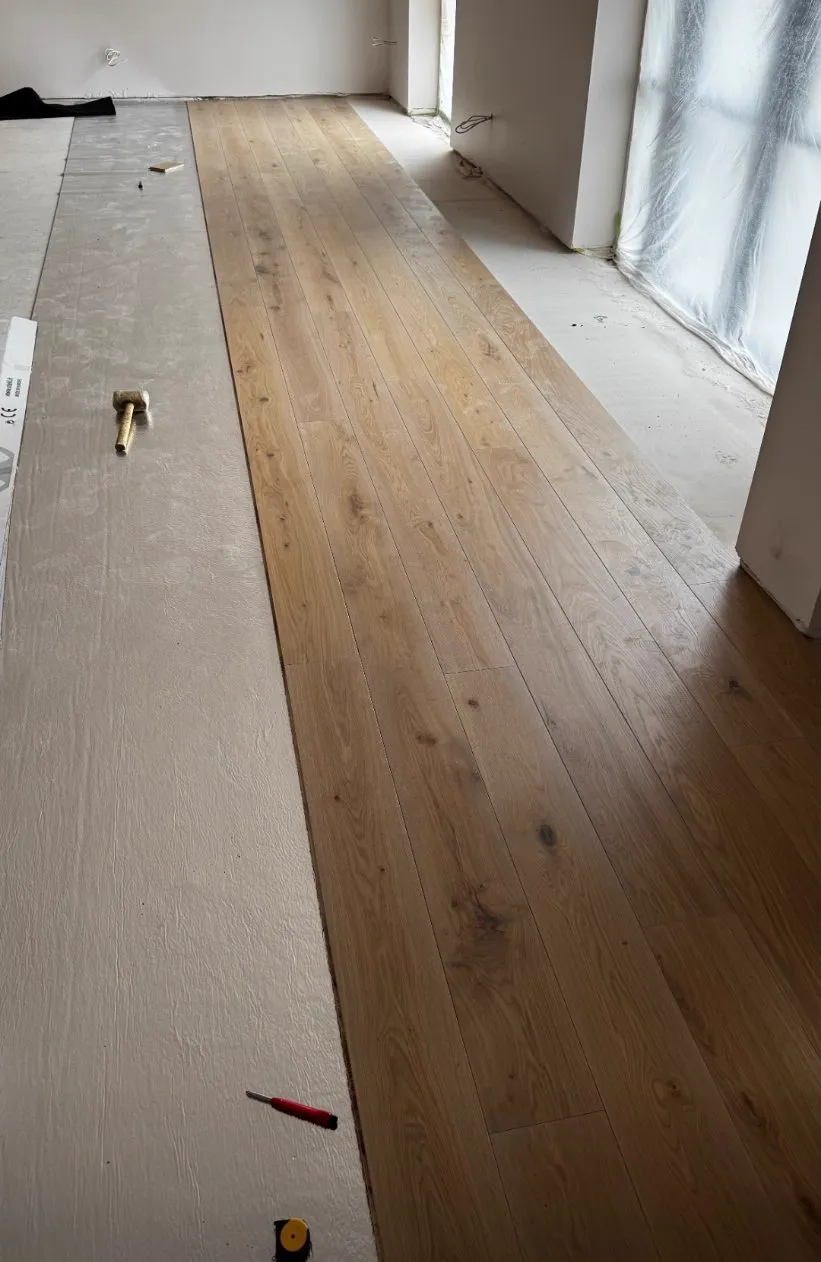
An engineered board is real oak where it counts: a solid oak wear layer bonded to a base of cross-laid ply. The layers underneath pull against each other, so the board barely moves when the heating comes on in October or the humidity climbs in August. That stability is the whole point, and it's why engineered is the right call for most London homes today.
Where engineered wins: flats with concrete subfloors, where solid timber has nothing to nail into and engineered glues or floats beautifully. Anywhere with underfloor heating, which solid timber simply shouldn't go over. Kitchens and open-plan spaces, where steam, spills and temperature swings punish a solid board. Basements and extensions on fresh screed.
Where solid still wins: period restorations where like-for-like matters. If you're patching or extending original Victorian floorboards, or you want a floor that's the same timber all the way through because that's what the house deserves, solid is the honest choice. We fit both, so you'll get the recommendation your room needs, not the one that suits us.
The Number That Matters
Wear Layers: The Question to Ask Before You Buy
The wear layer is the solid oak on top of the board, and it decides the floor's whole future. It's what you walk on, what gets sanded, and what stands between you and the ply underneath. Two boards can look identical in a showroom and have completely different lives ahead of them because of this one number.
A good wear layer takes one or two careful sands over the life of the floor. That sounds modest until you remember a floor only needs sanding when it's genuinely worn, which in a family home is many years apart, so one or two sands is decades of service. A thin wear layer on a cheaper board may never safely take a sand at all: once it's scratched and tired, it's done.
Because we sand floors for a living, we look at wear layers differently to a shop that only sells boards. When we recommend a board, we're thinking about the sand we might be doing for you in fifteen years, not just the delivery next month. That's the advantage of buying from the people who'll be fitting it: as sanders, we know exactly what the machines will find up there one day.
Format
Plank or Herringbone?
Engineered oak comes in both, and the same colour reads completely differently in each. Long, wide planks calm a room and stretch it; the fewer the joints, the quieter the floor, which is why wide boards suit big open spaces. Herringbone brings movement and a period feel, and engineered herringbone gives you that pattern in rooms where solid blocks were never an option, concrete subfloors and heated floors included.
Herringbone is a different fitting discipline: always glue-down, nearly every block cut at least once, and the whole floor set out from a centre line so the pattern lands square in the room. We've given it a page of its own. For straight-lay planks and everything else we fit, start at the installation hub, and see finished floors of both kinds in the gallery.
We supply and fit across South London and central London from our base in Balham: the pale chevron we supplied and fitted in Camberwell is engineered oak doing exactly what this page describes, and our Kensington page covers the mansion flats where engineered earns its keep.
How It Goes Down
Glue-Down, Floating, and the 48 Hours First
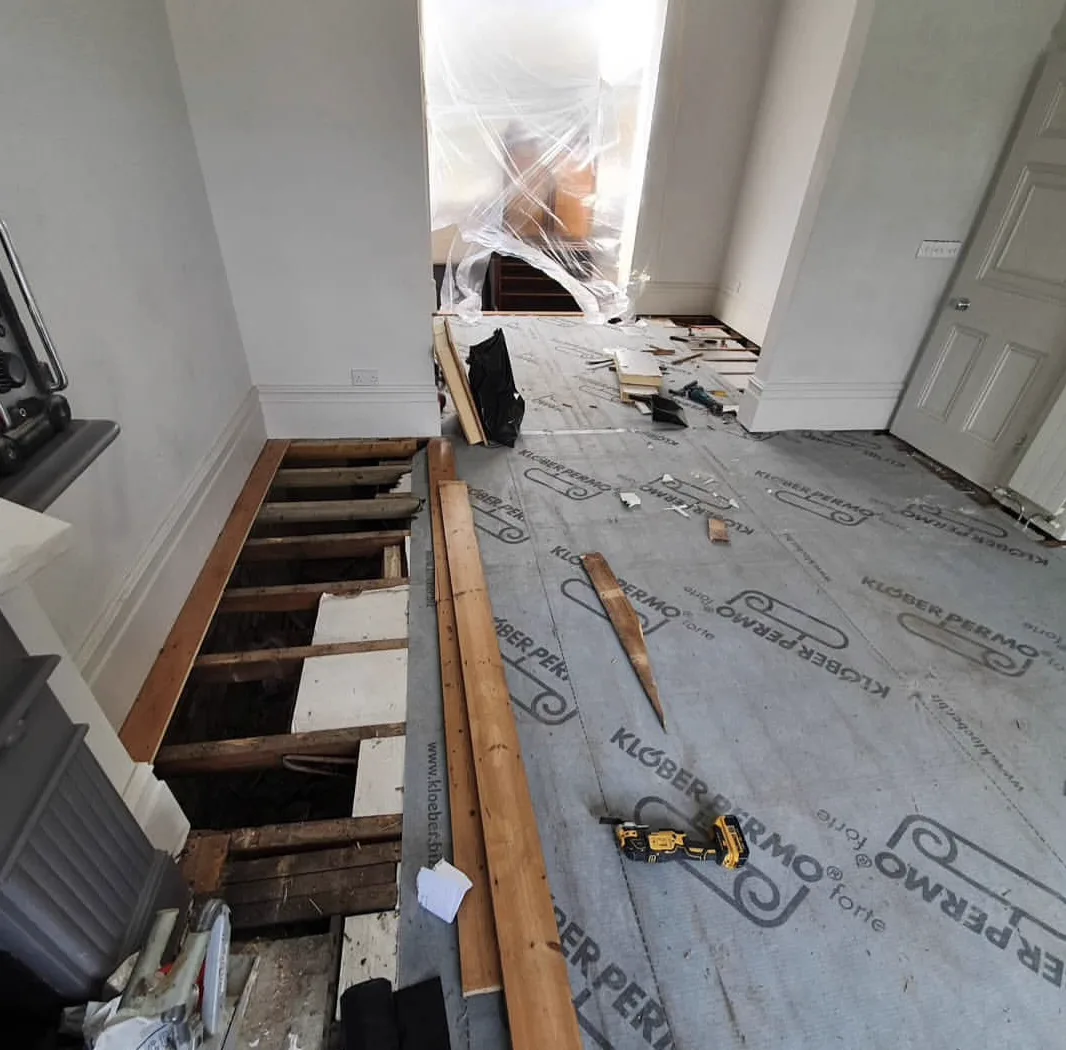
There are two ways to fit an engineered floor, and the room chooses, not the fitter's convenience. Glue-down bonds every board to the subfloor: it feels solid underfoot, sounds solid, and it's the only method for herringbone and for underfloor heating, where the heat needs a direct path up through the board. Floating sits the boards on underlay, clicked or glued to each other but not the floor: quicker, kinder to the cost of the job, and right for many straight-lay plank rooms. Either way the subfloor is levelled and moisture-checked before anything goes down, because a floor is only as good as what's under it.
Underfloor heating gets the honest version, not the sales version: engineered is the right wood for it, glue-down is the right method, and every board has a maximum floor temperature from its manufacturer that your system has to respect. We check the exact product against your system before anything is ordered, and if a board isn't rated for your setup we'll say so.
And before any of it: acclimatisation. Engineered boards spend 48 hours on site in their sealed packs, settling to your home's temperature and humidity before they're fixed into it. Solid timber needs longer, up to a week stacked loose in the room. Nobody can deliver boards in the morning and honestly fit them the same day, so we build those hours into the schedule instead of pretending they don't exist. It's a small patience that decides whether the floor stays flat for the next twenty years.
Fitted by Sanders
A Floor With a Future, Not Just a Fitting
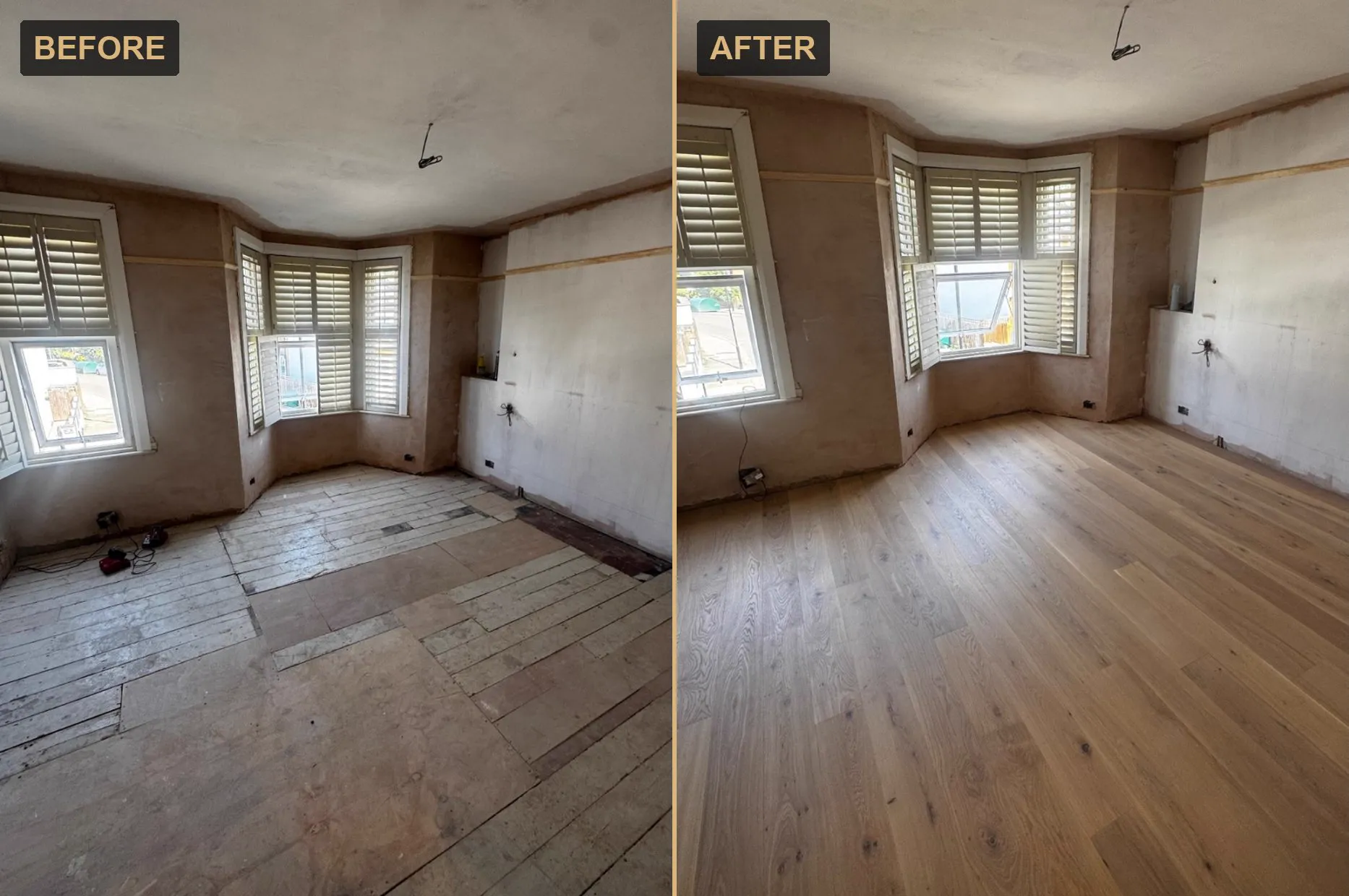
Because engineered oak is real oak on top, it has a second and sometimes a third life in it. Years from now, when the finish is tired and the traffic lanes show, a floor with a decent wear layer can be carefully sanded and refinished back to new, and engineered floors that are already down can often be restored rather than replaced. A floor covering gets ripped out and replaced; a floor gets brought back. That's why we're fussy about wear layers on the way in. Between us there's over 40 years' combined hands-on experience with wood floors, one of us on every job, and the same hands that fit your floor will be the ones that bring it back one day. We're on Checkatrade, we carry public liability insurance, certificate on request, and you can read what previous clients say on our reviews page.

Dean on the road. One of us, Dean or Luke, is on every job.
No Obligation
Not sure which board your room needs? One of us will come and measure up, samples in hand.
Book a Free Site VisitStraight Answers
Engineered Wood Questions, Answered
What actually is engineered wood flooring?
Engineered or solid, which should I choose?
Can engineered wood be sanded in the future?
Does engineered wood work over underfloor heating?
How long do the boards need to acclimatise before fitting?
Glue-down or floating, which fitting method is right?
Can I buy the boards from you and how do I see prices?
Can an engineered floor that is already down be restored?
From Our Google Reviews
"Recently had some new flooring on my apartment put in and it looks great - Luke did an excellent job. The whole process was relatively quick install and a lot of care has been put in to details around the edges and doorways. Also..."
Thirty Seconds, Five Boxes
Start With the Samples
Leave your details and we'll ring you back to arrange your free site visit, samples in hand.
We're booking about three months ahead at the moment, and a deposit holds your place in the queue. Dates tight? Ring us anyway, cancellations happen and smaller jobs can often be slotted in.
Every job is backed by the Howard Naish Workmanship Promise: 2 years on installation, 12 months on sanding and refinishing. If our work fails, we fix it.
Free Quote, No Obligation
See the Boards Before You Choose Them
A free site visit, real samples in your own light, and a fixed written quote for supply and fit.
020 3131 0122