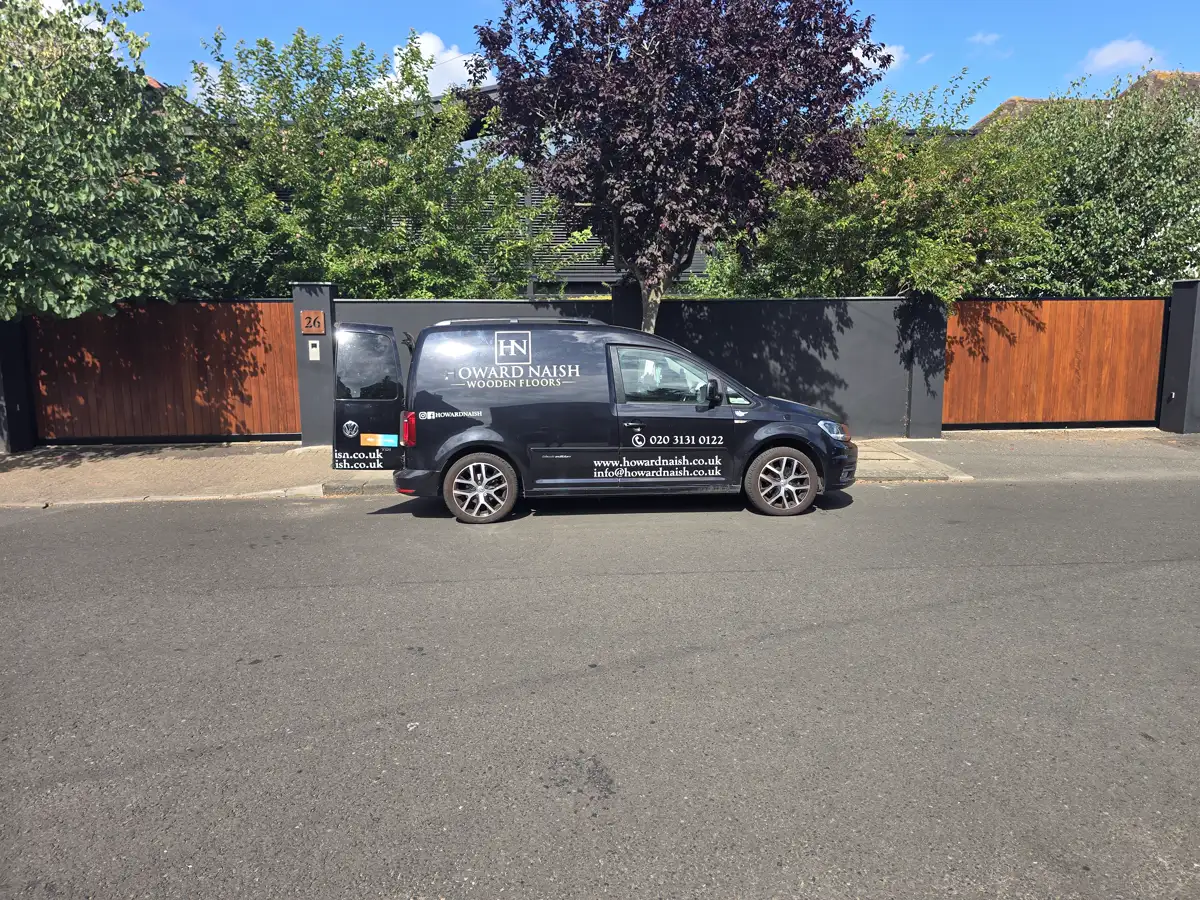
This job started as something completely different. Nic booked us in to re-oil and refresh his wooden floor. We turned up, he showed us the floor, and it looked like it had been laid the week before.
We tested it anyway, because looks can lie. They didn't this time. The finish was still doing its job, the boards were still well protected, and there was nothing we could do to that floor that it actually needed. So we told Nic the truth: keep your money, give it another six months, and call us back when it's genuinely ready for a fresh coat.
We've written before about why not every floor needs a full sand, and this was that same conversation standing in a hallway in Richmond. Charging someone to re-oil a floor that doesn't need it is easy money and bad business. We'd rather come back when the work is real.
"While You're Here..."
Then Nic asked a good question. Since we'd set the day aside anyway, would we be happy to look at his front door and driveway gates instead?
We had a look, and unlike the floor, they were desperate. Beautiful hardwood, but they'd taken real sun damage: worn, dry, thirsty wood that had drunk everything its old finish had to give and was starting to grey and fade. A floor indoors is protected from the weather. A door and gates facing the sun all day get hit with UV from morning to night, and the finish on them was never going to keep up.
Sanding By Hand, On Purpose
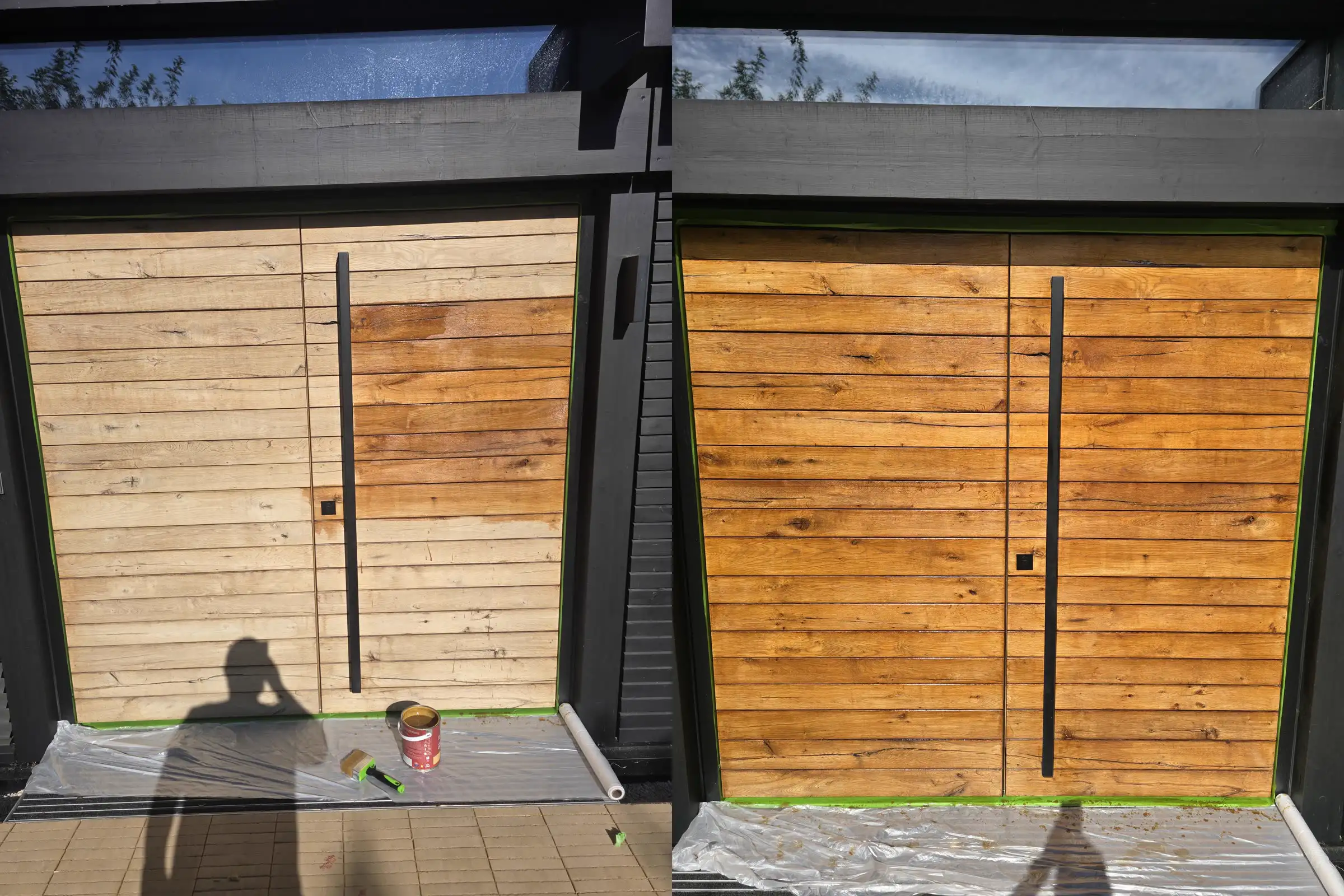
These doors and gates have lovely crisp profiles and clean edges, and a machine sander is exactly how you ruin them. So we did the whole lot by hand: an 80 grit first to cut back the damaged, greyed surface without eating into the profile, then smoothed off with a 120 mesh so the surface was ready to take oil evenly. It's slower, and it's the right way.
Two Coats of UV-Resistant Oil
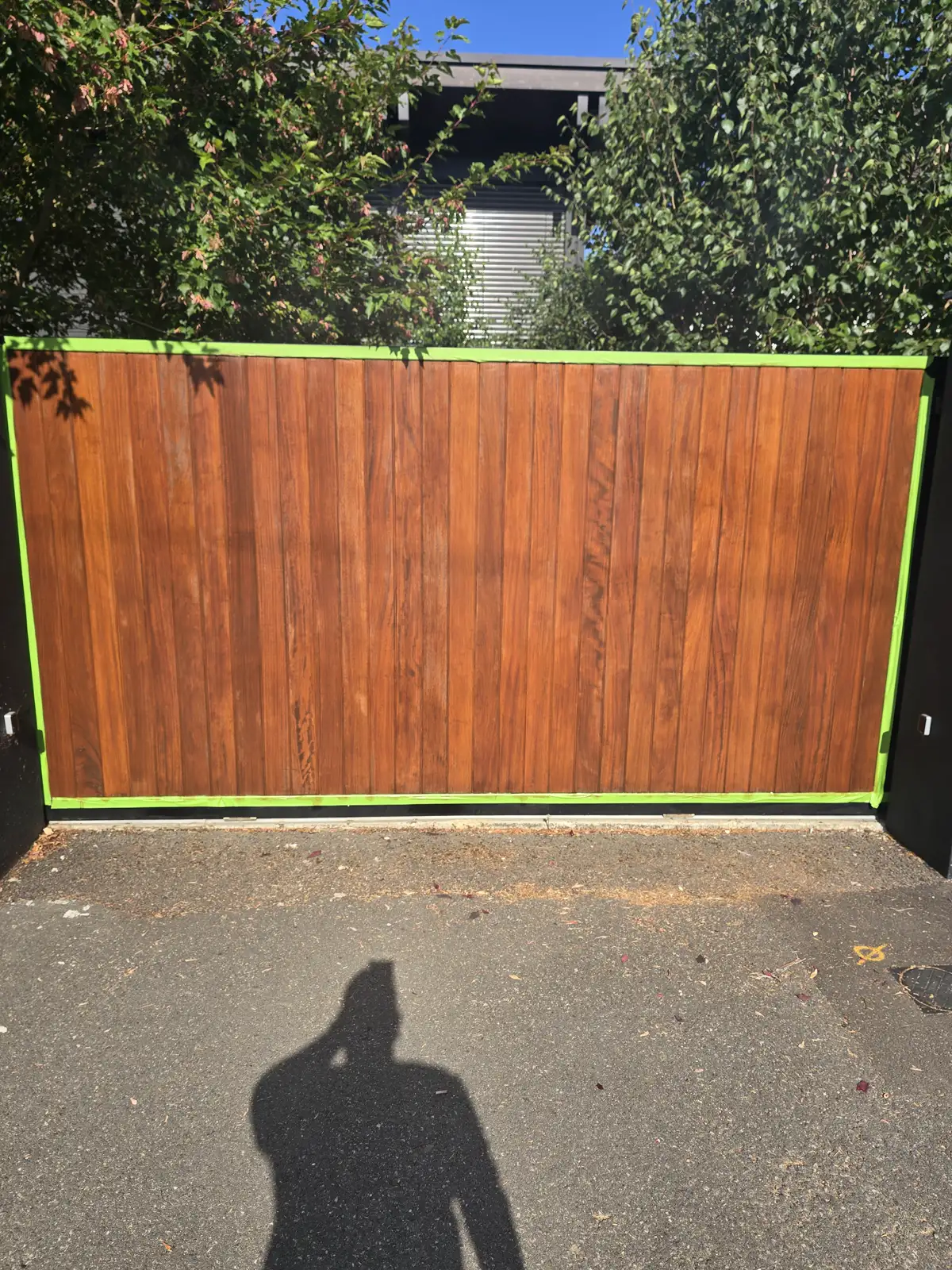
Once the wood was clean and keyed, we applied two coats of a professional UV-resistant exterior oil. That UV protection is the whole point on outside woodwork: it's the sun, more than the rain, that killed the old finish. This oil is built for exactly that, and it should last far better than what was on there before.
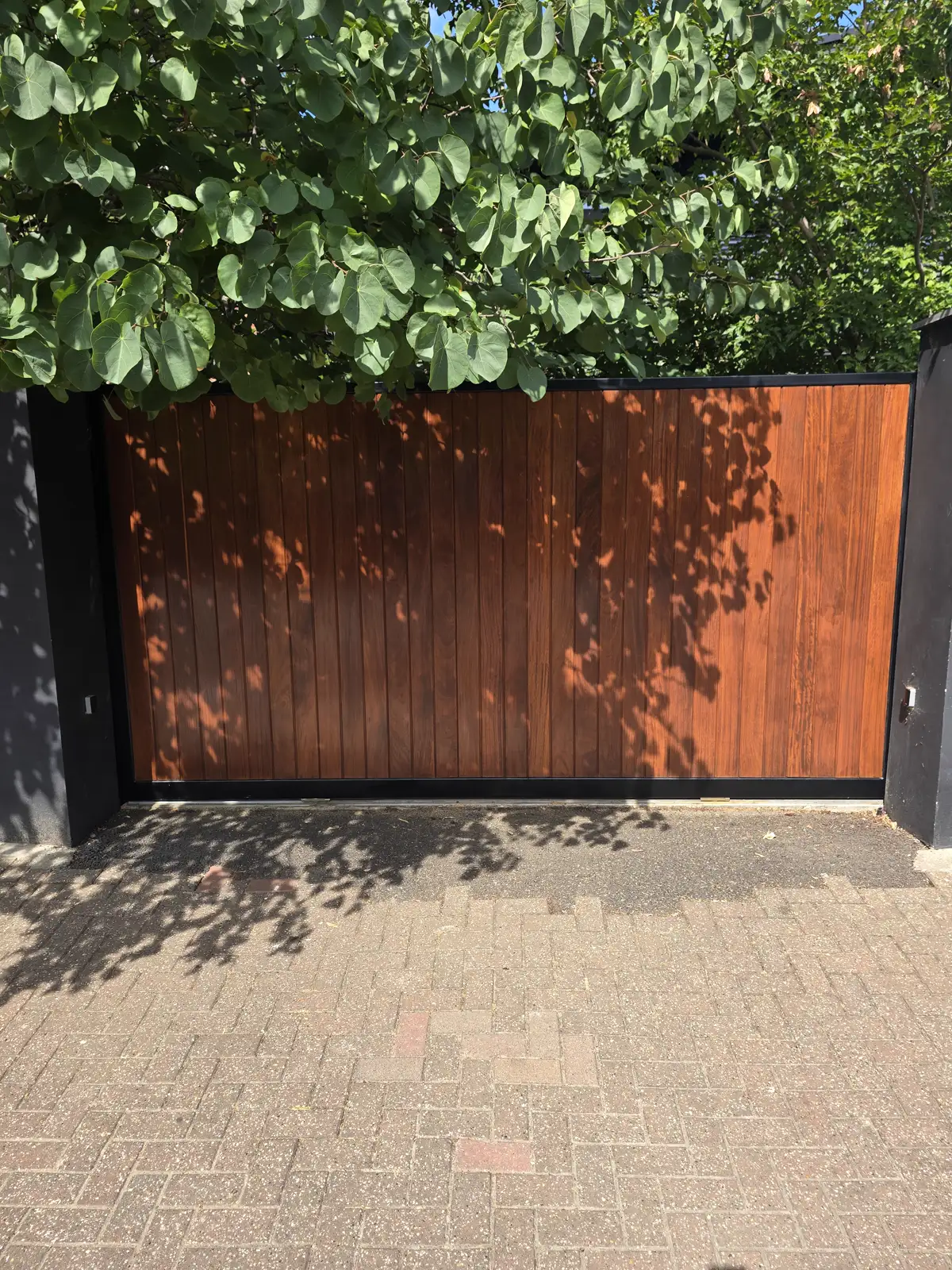
Nic was very happy, and honestly, so were we. There's something satisfying about wood this good getting the treatment it deserves, and the before and after speaks for itself.
Questions We Get Asked About Doors and Gates
What kind of oil should you use on an exterior door or gates?
A proper exterior wood oil with UV filters. Teak oil and Danish oil are fine indoors or on garden furniture, but they don't give lasting UV protection, and a film finish like a lacquer is the worst choice outside: sun and rain get under the film and it cracks and peels. A penetrating UV-resistant oil soaks into the wood, so there's nothing to peel. It just fades slowly and tells you when it wants another coat.
How often should doors and gates be re-oiled?
Once a year for anything that catches the weather. Osmo say the same about their own exterior oils. A sheltered door under a porch can stretch to every two years, but south-facing wood in full sun shouldn't be left longer than twelve months. The good news is the maintenance is just a clean and one thin fresh coat, no stripping.
Why does the sun turn wood grey?
UV breaks down lignin, the natural glue that holds the wood fibres together and gives timber most of its colour. Rain then washes it away and leaves the pale fibres exposed, which is why sun-baked wood goes dry and silvery. It's surface-deep to start with, which is why sanding brings the true colour straight back.
Can you oil over the old finish, or does it need sanding back?
If the old finish is a lacquer or anything else that forms a film, it has to come off completely, because oil only works by soaking into bare wood. Even over an old oiled finish, a light sand gives the new oil an even, open surface, so the colour goes on evenly instead of blotchy. That's exactly why Nic's door and gates were sanded right back first.
How long does a door and a pair of gates take?
Usually a day. Nic's front door and both driveway gates were hand sanded and given their two coats in a single visit. The oil is touch-dry quickly, but go gently on handles and latches for the first couple of days while it fully hardens.
If You've Got Wood That Isn't a Floor
Floors are our trade, but wood is wood. Doors, gates, garden woodwork: if it's hardwood and it's suffering, the same hands and the same care apply. And if you're not sure whether your floor, door or gates actually need work yet, we'll tell you straight, even when the honest answer is "not yet". Ask Nic.
If you'd like your outside wood looked after on a schedule rather than waiting for it to grey out, we can add it to the same yearly visit as your floor: our care plan covers the floors, and the doors and gates can ride along. Just ask.
Call us: 020 3131 0122
Email: [email protected]
Or book a free site visit and we'll have a look, tell you what it needs, and just as importantly, what it doesn't.