Most people who call us about a tired wood floor assume they need the full works: sanding right back to bare timber, then building the finish up from scratch. Sometimes that's exactly right. But not always, and a company that quotes you for a full sand without properly looking at the floor first is doing you no favours.
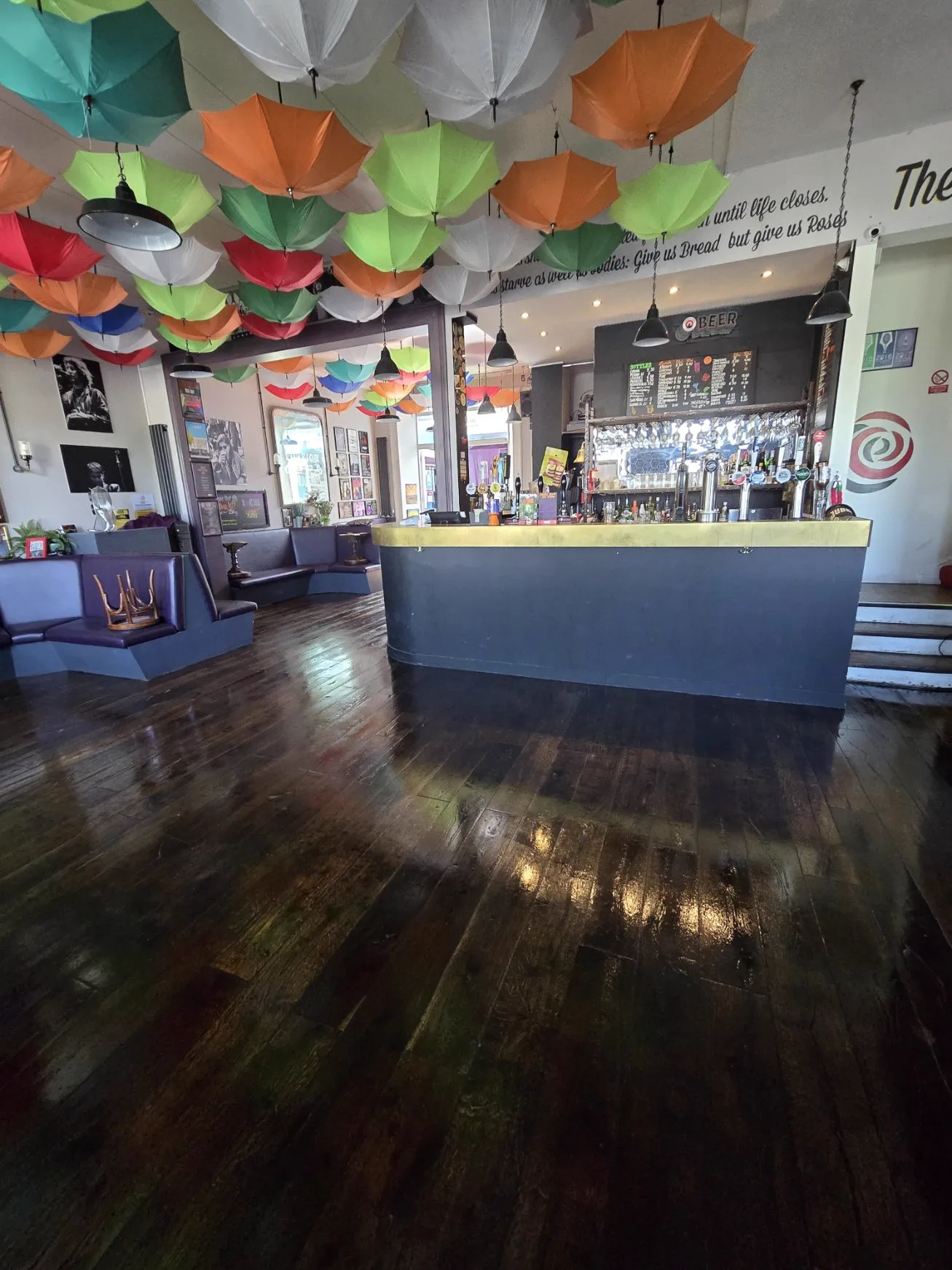
The photo above is The Bread and Roses in Clapham, a pub we looked after last week. That floor takes more punishment in a weekend than most living rooms see in a year. And we didn't sand it at all.
What We Actually Did
Three things, and none of them involved stripping the floor back:
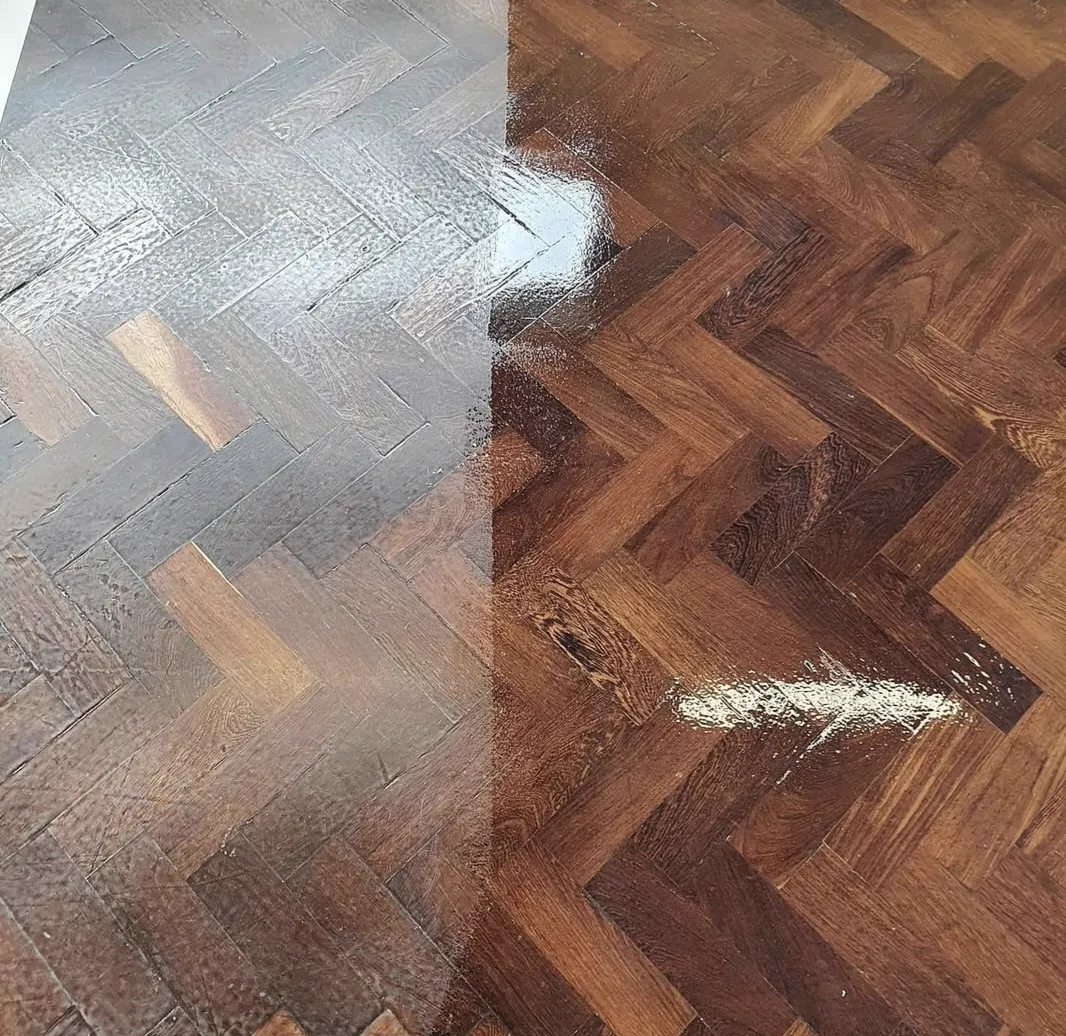
- A proper deep clean. Years of general grime, spills and cleaning-product residue lifted off with a commercial cleaning solution and a microfibre mop system, so we were working on the actual floor rather than what was sitting on top of it. On a pub floor this step alone makes a visible difference: you can see the grain come back once the build-up is gone.
- A wire mesh over the whole floor. A mesh screen on the buffer, run across every board. It keys the surface of the old finish and takes the tired top layer off without touching the timber underneath. No belt sander, no heavy dust extraction, no noise complaints from the neighbours. The whole process takes a few hours for a large room, compared to a full day or more for a proper sand.
- A fresh coat of oil over the top. The new oil feeds into the boards, bonds to the keyed surface, and brings back the depth and shine you can see in the photo. We use Osmo or Bona oils depending on the existing finish and the look the client wants. One coat is usually enough for a maintenance refresh; heavily worn areas might get a second pass.
That's it. The pub got a floor that looks the business, for a fraction of the cost and disruption of a full restoration, and it was back to pulling pints in no time. Total time on site was about half a day. A full sand of the same area would have taken two to three days and cost three to four times as much.
Why This Works on Oiled Floors
An oiled floor is designed to be topped up. That's the whole point of choosing oil over lacquer: the finish lives in the wood rather than sitting on it as a plastic skin, so when it starts looking thirsty you feed it, you don't strip it. Done regularly, a maintenance coat like this can keep a hard-working floor going for years between full sands.
Most oiled floors benefit from a maintenance top-up every one to two years in a busy household. High-traffic areas like hallways and kitchens wear faster than bedrooms, so you can often just treat the areas that need it rather than doing the whole house. Products like Osmo Maintenance Oil or Bona Oiled Floor Refresher are designed for exactly this job, and we sell both in our shop if you want to do light top-ups between professional visits.
Lacquered floors can sometimes be revived too, with a buff and a fresh coat of lacquer over the top, as long as the existing lacquer is intact and has not worn through to bare wood. If the lacquer has broken down in traffic lanes (you can feel it with your hand: rough patches where it used to be smooth), that is when a full sand becomes necessary. It's a judgement call, and it's one we make by looking at the actual floor, not by guessing over the phone.
The Tooting Floor We Couldn't Bring Ourselves to Sand
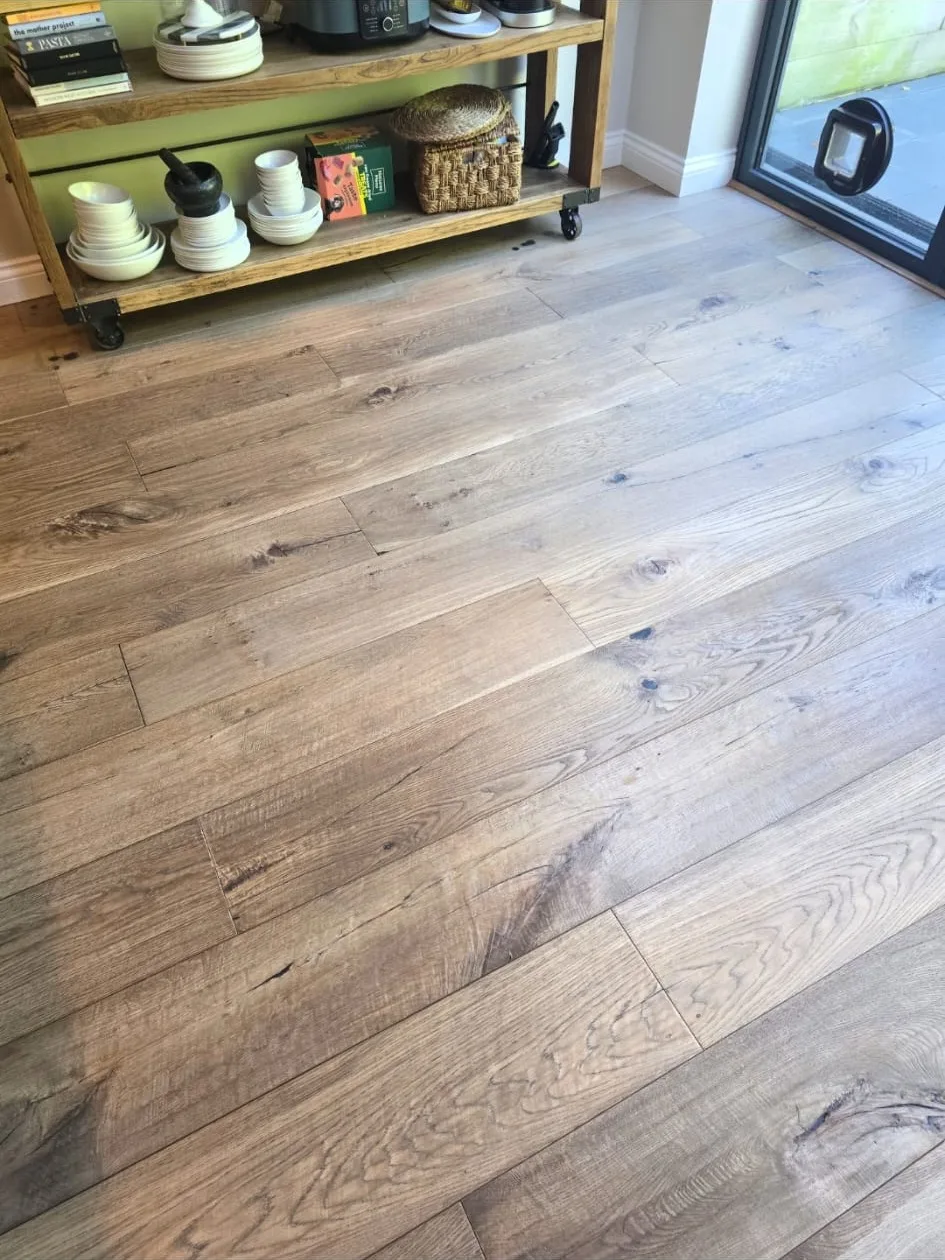
And here's what that judgement call looks like when it costs us money. A client in Tooting called about his oak floor. He was a busy man, hard to pin down for a site visit, so the job was priced from photos and phone calls. He was sure the whole floor needed sanding, and from pictures it was hard for us to tell, so we went with what he asked for: a full sand and refinish, booked two months ahead, three days set aside in the diary.
When we arrived he made us a coffee, and while we drank it Dean kept looking at the floor. He couldn't bring himself to put the sanders on it. So he asked straight: "Are you sure you want to sand this? I don't believe it needs sanding. What are your reasons for it?"
The client said it just needed bringing back, to look like it did when it was first laid. And the truth was he'd looked after the floor so well that there were only light surface scratches sitting in the finish. Barely anything wrong with it. So Dean made him an offer: we'd do a light abrasion and a fresh coat of lacquer first, and he was so confident it would come up well that if it didn't, we wouldn't charge for it, and we'd revert to the full sand as planned.
It took a couple of hours. The client was over the moon, and it saved him over 70% of the bill he had been expecting to pay.
He later left us this review on Checkatrade:
"My initial assumption was that the oak floor needed sanding. However, on examination Howard Naish said it only needed a very light sanding (no dust!) and some lacquer. How many companies talk their clients into spending less money? The work itself was carried out to a high standard. No hesitation in recommending the company."
"How many companies talk their clients into spending less money?" is the whole point of this article in one sentence. We'd rather lose two and a half days of booked work than sand a floor that doesn't need it.
When a Revive Is Enough
A deep clean, buff and re-coat is usually the right call when:
- The finish looks dull, patchy or thirsty, but it hasn't worn through. Run your hand across the floor: if it still feels smooth and even, the finish is intact and a top-up will bring it back.
- The scratches are in the finish, not in the wood itself. Surface scratches disappear under a fresh coat. If you can feel a groove with your fingernail, that scratch is in the timber and needs sanding.
- The colour is still fairly even across the room. Patchy fading in doorways and traffic lanes is normal wear on an oiled floor and responds well to a targeted re-oil.
- The floor was oiled, and just hasn't been fed for a few years. This is the most common situation we see: the floor looks tired because it is dry, not damaged.
When You Really Do Need the Full Sand
We're not against sanding. It's most of what we do. A revive won't rescue a floor where:
- Traffic lanes have worn through to bare, grey timber. Once the finish is gone and the wood itself is exposed, the only path back is a full sand down to fresh timber and a new finish built up from scratch.
- There are deep scratches, burns or stains cut into the wood itself. Anything below the surface of the finish needs the sander to reach it.
- Water damage has blackened or cupped the boards. Black water stains soak deep into oak's tannins and will not sand out with a light screen. Cupping (boards lifting at the edges) needs the moisture source fixed first, then a full sand once the timber has settled.
- You want to change the colour, because stain needs bare wood to absorb evenly. A colour change always starts with a full sand back to fresh timber.
The Part Nobody Tells You
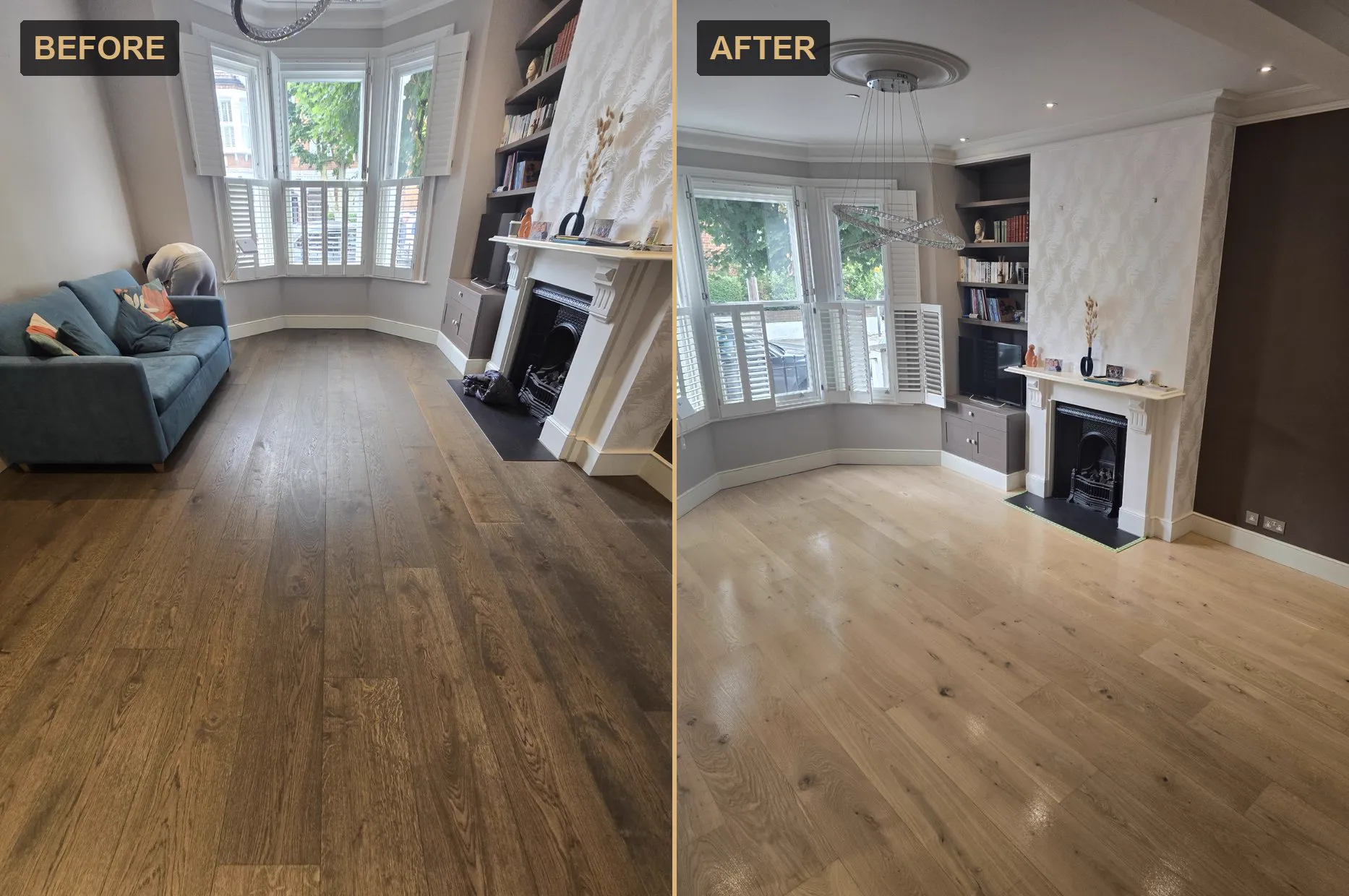
Every floor only has so many sands in it. Each full sand takes roughly a millimetre off the surface, and on an engineered board the wear layer is typically 4 to 6mm, which means two or three proper sands over its entire life. Original solid pine boards are much thicker and can handle seven to ten sands, but even they are not infinite. So skipping an unnecessary sand isn't just cheaper this time, it genuinely extends the life of your floor by years.
This is also why we never recommend a full sand when a revive will do the job. A company that sands every floor it sees, regardless of condition, is taking timber off boards that did not need it. That costs the client more today and shortens the life of the floor for whoever owns the home next.
That's why our site visits are free and our advice is honest. If your floor needs the full three-stage sand, we'll tell you and we'll do it properly. If it just needs some TLC, a deep clean, a buff and a coat of oil, we'll tell you that instead, and the bill will be a lot smaller. Either way, you'll know what your floor actually needs before you spend a penny. And if you are budgeting, the cost guide has real numbers for both options.
What to Tell Us When You Call
If you are not sure whether your floor needs the full works or just a refresh, here is what helps us give you a quick steer before we even visit: what type of wood it is (or your best guess), roughly how old the finish is, whether it is oiled or lacquered (if you know), and what is bothering you most about it. A photo of the worst area helps too. We will tell you honestly whether it sounds like a revive job or a full sand, and a free site visit confirms it either way.
If your floor is looking tired, don't assume the worst. Let us have a look before you budget for the full works.
Call us: 020 3131 0122
Email: [email protected]
Or book a free site visit. We'll assess the floor, tell you straight whether it needs a sand or a revive, and give you a clear, honest quote.